


Our new paper, “AI-assisted monitoring of coal particles within droplets in a coal monoethylene glycol slurry spray,” is now available on KITopen, the research repository of Karlsruhe Institute of Technology (KIT).
Together with Tobias Jakobs from KIT and Patrick Stegmann, we studied how artificial intelligence can extract information about particles inside complex spray droplets.
The results show prediction accuracies of up to 95%.
The work formed part of the 41st International Symposium on Combustion (ISOC) in Kyoto, Japan, held from 26 to 31 July 2026
https://publikationen.bibliothek.kit.edu/1000196272
From Individual Droplets to Continuous Data Streams
Most optical spray measurement systems analyze one droplet at a time.
They detect a droplet, evaluate its optical signal and calculate values such as droplet size and velocity.
This works well for many spray measurements. However, complex droplets contain much more information. Their light-scattering signals can also carry information about:
- particle concentration,
- particle size,
- refractive index,
- material composition,
- and other physical properties.
In this study, we follow a different approach.
Instead of selecting only individual droplet signals, we keep the continuous light-scattering data stream. Artificial intelligence then searches this data for useful patterns.
This approach keeps much more of the original measurement information.
ParticleTensorAI Converts Measurement Signals into AI Data
We used Time-Shift Time-of-Flight (TSTOF) measurement technology for the experiments.
Four optical detectors recorded the light scattered by droplets as they passed through the measurement volume. Each detector viewed the droplets from a different angle and therefore produced its own signal stream.
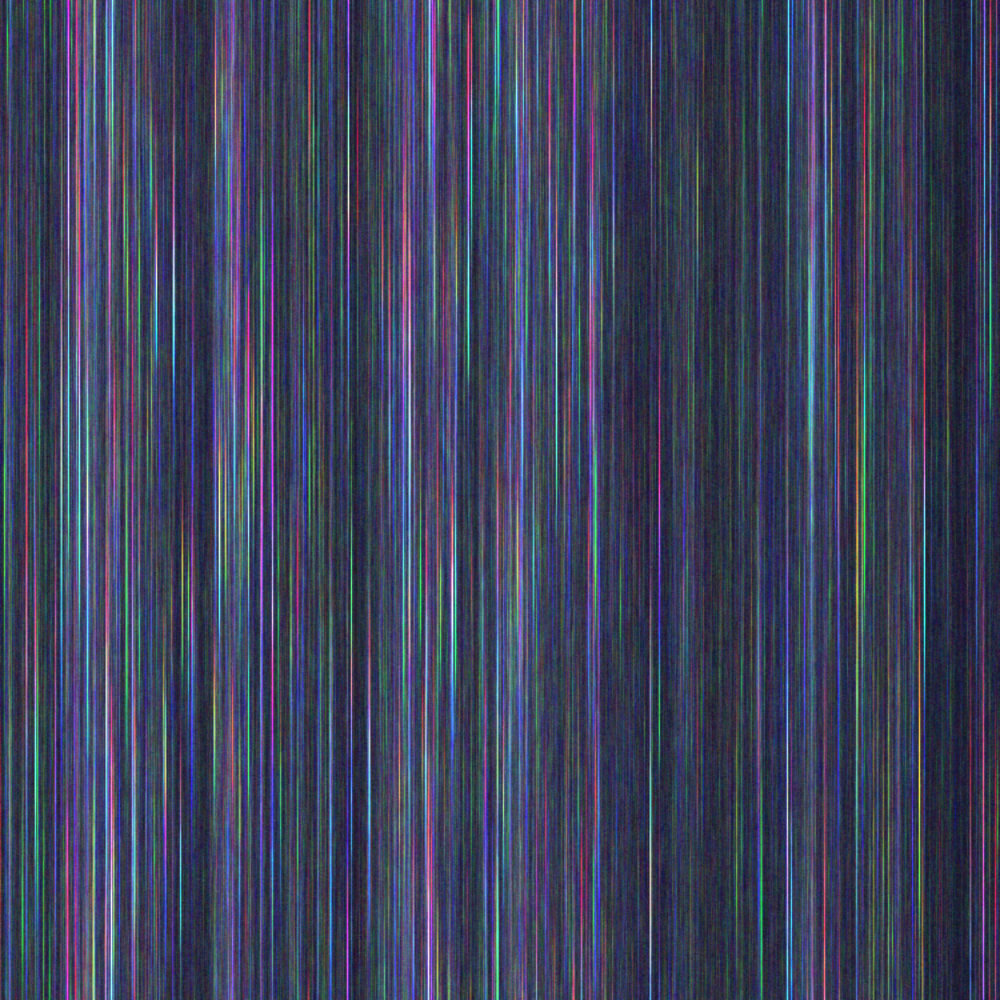
ParticleTensorAI (PTA) converts these fast detector signals into structured data that an AI model can analyze.
In the paper, we tested a format similar to an RGB image. We assigned different detector signals to the red, green and blue channels.
This allows us to use convolutional neural networks (CNNs), which researchers often use for image recognition, to analyze optical spray signals.
However, these ParticleTensorAI images are not photographs of the spray.
They represent the light-scattering signals from many droplets over a defined period of time.
AI Spray Diagnostics Reach Up to 95% Accuracy
We tested the method with coal particles inside monoethylene glycol slurry droplets.
The experiments included several coal particle sizes and three mass concentrations:
- 5%
- 10%
- 20%
The AI models learned to distinguish the different spray conditions from the optical signals.
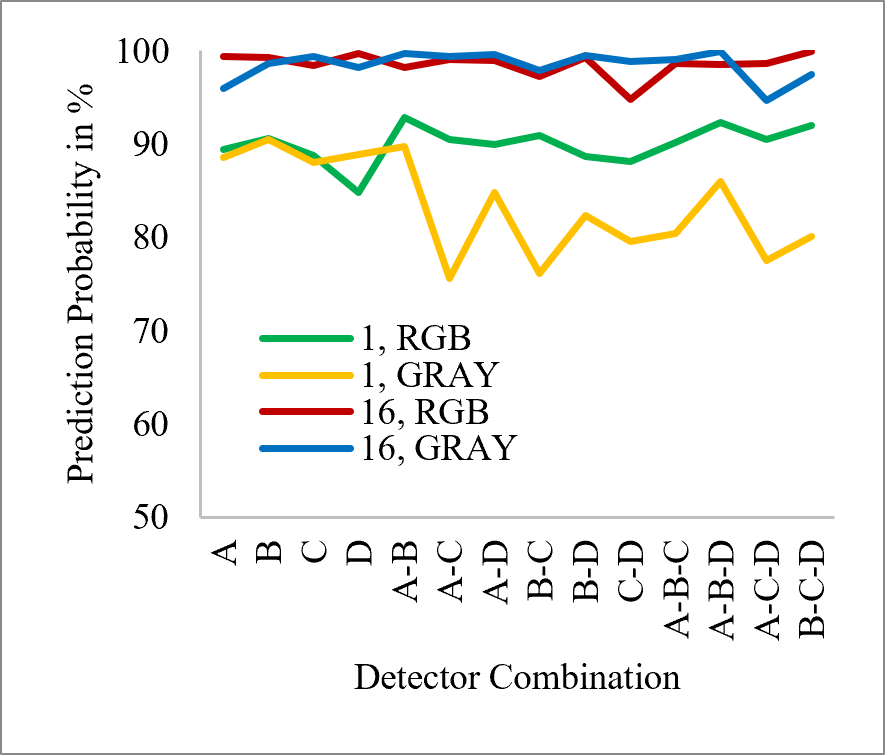
Our proof-of-principle tests reached prediction accuracies of up to 95%.
The AI identified the mass concentration more reliably than the average coal particle size.
We also found that a longer observation time can improve the results. A longer ParticleTensorAI contains signals from more droplets. The AI therefore receives more information about the complete spray.
How Many Detectors Does AI Need?
Another part of the study looked at the number of optical detectors.
At short observation times, keeping the detector signals separate gave better results. At longer observation times, the number of detector channels became less important.
This result is especially interesting for future measurement systems.
It suggests that some AI-based spray diagnostics may work with simpler optical sensor designs and fewer detectors.
We are continuing to investigate this question.
More Than Coal Slurry Measurement
Coal slurry served as the test case, but the main idea behind ParticleTensorAI has a much wider range of possible uses.
The method could support AI-based analysis of:
- suspension sprays,
- paint droplets,
- multicomponent liquids,
- particle-loaded droplets,
- material concentration,
- optical material properties,
- and industrial spray processes.
This is an important difference between conventional data analysis and the ParticleTensorAI concept.
Normally, we first decide which parts of a measurement signal are important. We then calculate specific parameters from these signals.
With ParticleTensorAI, we can keep much more of the original signal data and let the AI search for patterns that relate to the physical properties of the spray.
ParticleTensorAI for Future Spray Measurement
The study shows a new direction for AI-based spray diagnostics.
Artificial intelligence does not only help us analyze already calculated droplet parameters. It can work directly with continuous high-speed optical measurement data.
This opens new possibilities for measuring complex droplets where size and velocity alone do not provide enough information.
Future applications may include paint spray analysis, material characterization, process monitoring and smart inline spray sensors.