

At OPC 2014 – International Conference on Optical Particle Characterization, held from 10 to 14 March 2014 in Tokyo, Japan, Walter Schäfer and Cameron Tropea presented the conference paper “The time-shift technique for measurement size of non-transparent spherical particles.”
The paper shows how the time-shift technique can measure droplets in a milk spray. This topic is important for spray drying, because many spray drying processes use complex liquids. These liquids can contain fat, proteins, particles, or other dispersed material.
https://www.spiedigitallibrary.org/conference-proceedings-of-spie/9232.toc
Why Milk Spray Is Important
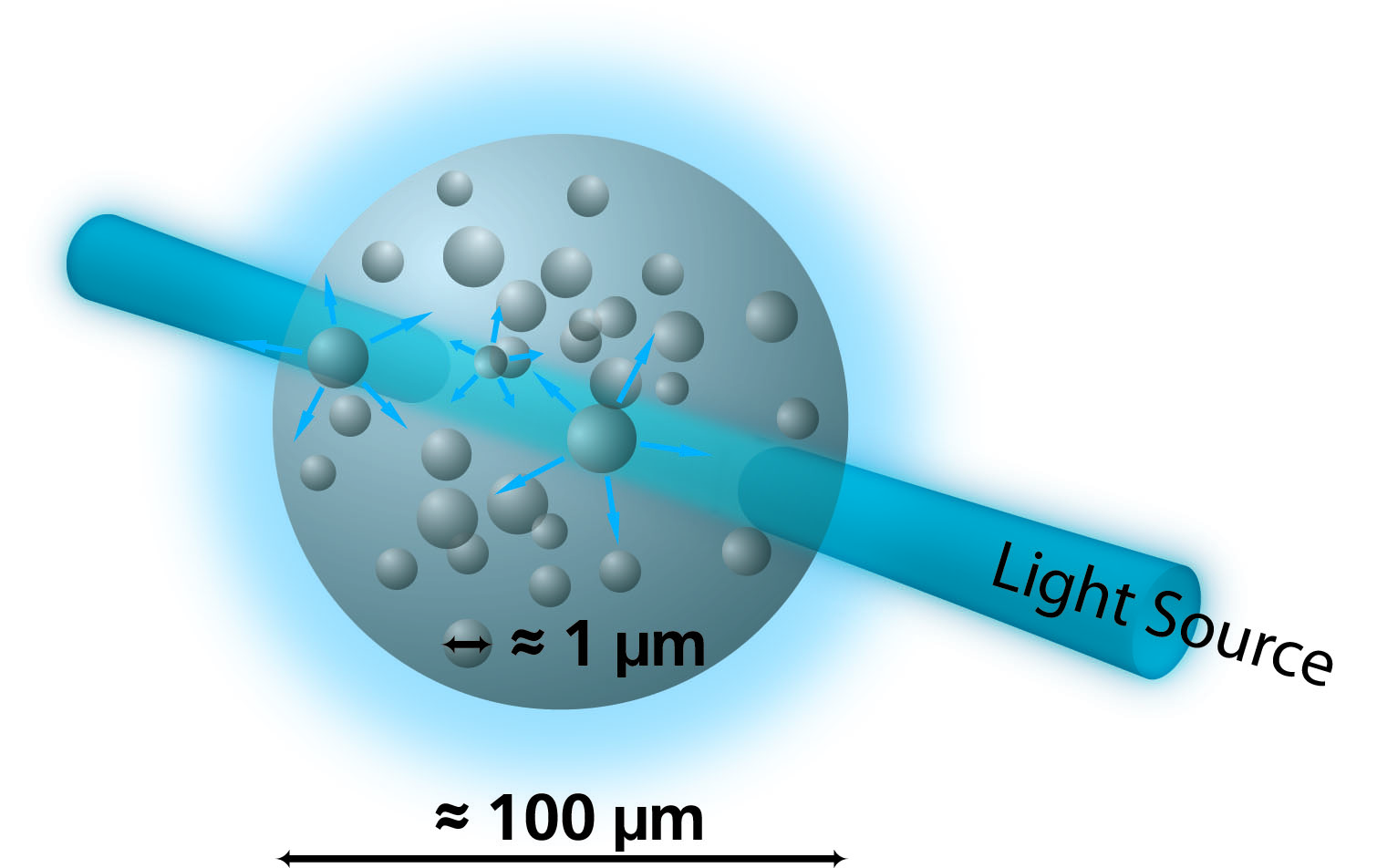
Milk spray is a useful example for complex droplet measurement. Milk droplets are not fully transparent. They contain fat particles and proteins. These inner structures scatter and absorb light.
Therefore, classical optical methods for transparent droplets can reach their limits. In contrast, the time-shift technique can analyze special signal features from non-transparent droplets.
Time-Shift Technique for Droplet Measurement
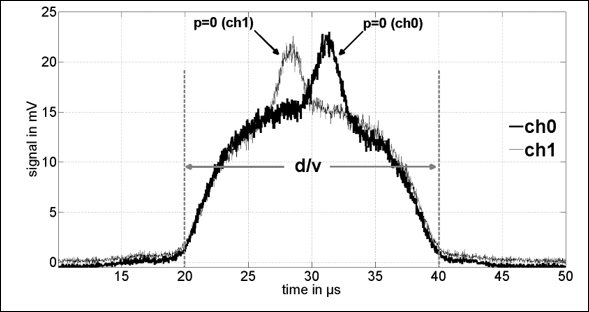
The time-shift technique analyzes the light scattering signal of a single droplet. The droplet passes through a shaped light beam. While it moves through the beam, it creates a time-resolved optical signal.
For non-transparent droplets, refracted light becomes weak. However, the droplet still creates reflection peaks and a signal pedestal. These signal parts contain useful information about the droplet.
As a result, the method can determine droplet size. In addition, the study used a time-of-flight setup to measure droplet velocity. Two focused light sheets created two signals. The time delay between these signals gave the droplet velocity.
Experimental Study with Milk Spray
In the experiment, the authors used a milk spray with 3.5% fat content. A flat fan nozzle generated the spray. The nozzle worked at different pressures.
The results showed clear trends. Higher nozzle pressure produced smaller droplets. In addition, higher pressure increased the mean droplet velocity.
These results match the expected behavior of spray atomization. Therefore, the study shows that the time-shift technique can measure complex droplets in real spray conditions.
Relevance for Spray Drying
Spray drying often starts with complex liquid sprays. For example, milk spray is important in food process engineering. Droplet size and droplet velocity influence drying time, particle formation, powder quality, and process stability.
For this reason, reliable droplet measurement can support spray drying research and process control. It can also help improve product quality and reduce process errors.
The method is also useful for other complex sprays. Examples include emulsions, suspensions, paint sprays, and pharmaceutical sprays.
Scientific Importance
This OPC 2014 paper helped extend optical particle measurement to non-transparent and complex droplets. It also showed that the time-shift technique can work in practical spray applications.
In addition, the work forms an early basis for later TSTOF-based systems such as SpraySpy, SprayQuantAI, ParticleTensorAI and AI-assisted spray measurement technologies.
Reference
Schäfer, W., & Tropea, C. (2014). The time-shift technique for measurement size of non-transparent spherical particles. Proceedings of SPIE, 9232, 92320H. https://doi.org/10.1117/12.2063342
