

This scientific article presents an AI-assisted method for determining the refractive index and mass concentration of individual spray droplets. The method uses TSTOF light scattering signals and machine learning to extract material-related information from dynamic droplets in a spray.
Classical optical spray measurement often focuses on droplet size and velocity. However, many industrial and scientific applications require additional information. For example, users may need to know the refractive index, liquid composition, or mass concentration inside individual droplets. AI-assisted droplet analysis can help extract this information from complex optical signals.
TSTOF Measurement and Light Scattering Signals
The TSTOF measurement principle analyzes time-shifted light scattering signals from droplets moving through a shaped light beam. These signals contain information about droplet motion, optical behavior, and material properties.
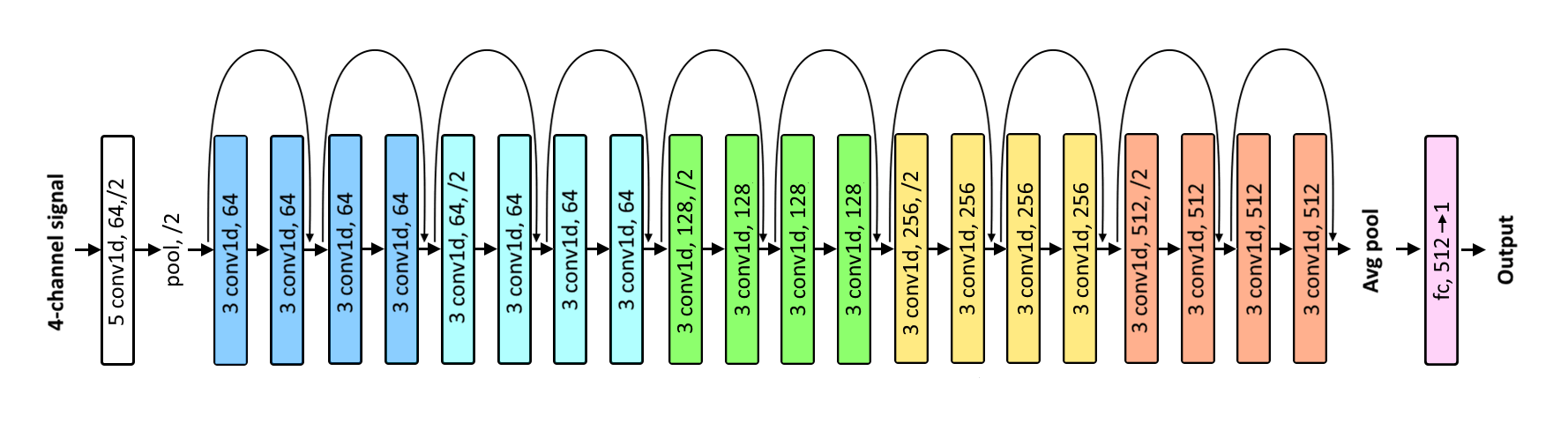
In this work, artificial intelligence supports the evaluation of these signals. The AI model learns signal patterns that relate to refractive index and mass concentration. As a result, the method extends classical droplet measurement toward material-sensitive spray diagnostics.
Refractive Index and Mass Concentration of Spray Droplets
The refractive index is an important optical property of liquids. It changes with liquid composition and can therefore provide valuable information about mixtures, solutions, and process conditions.
Mass concentration is also important for many spray processes. It can describe the amount of dissolved or suspended material inside a droplet. This is relevant for coating processes, slurry sprays, fuel sprays, chemical processes, and other multiphase applications.
By combining TSTOF light scattering signals with AI-assisted analysis, the method can evaluate individual spray droplets instead of only averaged spray properties. This creates a more detailed view of spray composition and process behavior.
From Classical Spray Diagnostics to AI-Assisted Analysis
This article shows how optical measurement technology can move beyond classical size and velocity measurement. AI-assisted droplet analysis allows users to extract additional information from the same type of light scattering signals.
Therefore, the method supports new applications in spray measurement technology, particle characterization, material analysis, and industrial process monitoring. It also connects established TSTOF diagnostics with modern AI-based signal evaluation.
Application Potential
AI-assisted droplet analysis can help researchers and engineers better understand complex sprays. It can support the characterization of liquid mixtures, concentration changes, coating materials, slurry droplets, and other dynamic multiphase systems.
The approach also offers potential for real-time spray monitoring. In future applications, such methods may help detect process changes earlier, improve quality control, and support more stable industrial spray processes.
AI Assisted Determination of Refractive Index and Mass Concentration of Individual Spray Droplets Using TSTOF Light-Scattering Signals
Walter Schäfer, E. Goldenberg, M. Al-Naggar and W. Schaufler
Abstract: In this work, we investigate whether light-scattering signals recorded by a Time-Shift–Time-of-Flight (TSTOF) instrument contain sufficient information to recover refractive index and mass concentration and demonstrate how artificial intelligence (AI) can exploit this information. Accurate determination of the refractive index and mass concentration of individual dynamic droplets is essential for the characterization of transparent and suspension droplets in industrial spray processes. Conventional optical diagnostics cannot provide these quantities for individual droplets in motion, and current TSTOF-based instruments are generally limited to size, velocity, and opacity, especially under dense spray conditions. Controlled measurements were performed on suspension droplets with concentrations from 0\% to 100\% and on transparent droplets from water–glycerin mixtures with refractive indices between 1.30 and 1.40. For each droplet, light-scattering signals were recorded as it traversed an elliptical Gaussian beam. AI models were trained on different combinations of these signals. The results demonstrate that AI-enhanced TSTOF diagnostics enable real-time, composition-sensitive characterization of dynamic droplets and significantly extend the capabilities of current optical spray measurement systems.
https://www.sciencedirect.com/science/article/abs/pii/S0142727X26001839?via%3Dihub
