

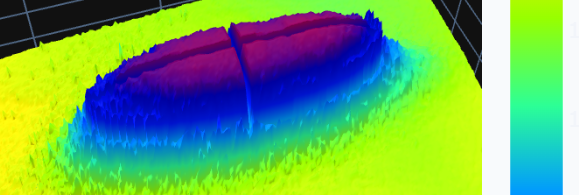
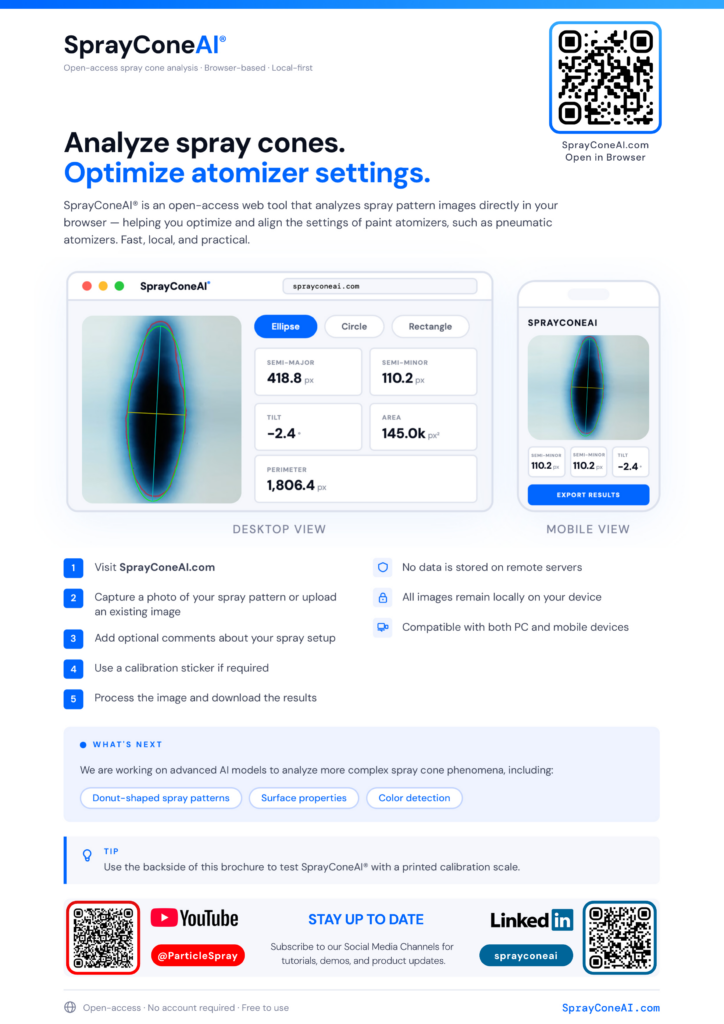
SprayConeAI is a web-based software tool for the visual analysis of spray patterns. It helps users evaluate spray images quickly and compare different spray conditions in a clear and consistent way.
The software supports applications in spray technology, coating processes, nozzle development, quality control, research, and education. Users can upload an image of a spray pattern and analyze it directly in a web browser.
SprayConeAI is a product and brand name. The physical spray pattern still comes from the nozzle, atomizer, liquid properties, operating conditions, and surrounding airflow.
What is SprayConeAI used for?
SprayConeAI helps users analyze the shape and distribution of a visible spray pattern.
Typical applications include:
- comparison of different nozzles,
- evaluation of spray symmetry,
- detection of pattern changes,
- comparison of pressure settings,
- analysis of liquid flow rate effects,
- evaluation of spray gun adjustments,
- documentation of coating tests,
- quality control of spray patterns.
As a result, users can compare spray images more objectively instead of relying only on visual judgement.
How does SprayConeAI work?
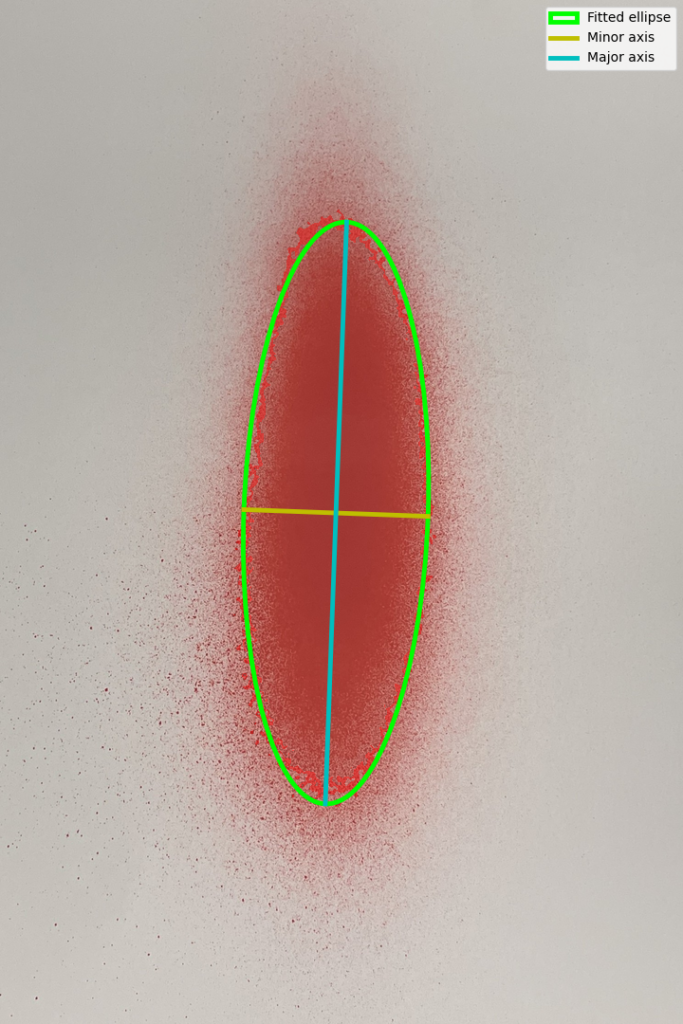
The user uploads an image of a spray pattern to the web application. SprayConeAI then processes the image and separates the relevant spray region from the background.
The software can use image-processing and AI-assisted methods to identify the spray pattern. Afterwards, it provides visual and numerical information about the detected region.
The exact results depend on the image quality, background, lighting, camera position, and spray pattern.
How to Use the SprayConeAI® Calibration Sticker
The SprayConeAI® calibration sticker can be downloaded and used free of charge.

You can print the calibration sticker yourself and use it directly in laboratory tests, production environments, or spray-pattern documentation. The sticker provides a defined reference scale that enables SprayConeAI to determine the actual dimensions of the recorded spray pattern.
When analyzing an image, enter the exact height and width of the printed calibration sticker. SprayConeAI® uses these dimensions to calculate the real width, height, area, and other geometrical properties of the spray cone.
By default, SprayConeAI contains calibration values for the DIN A4 version of the sticker:
- Height: 32 mm
- Width: 128 mm
The sticker can be resized before printing. However, the dimensions entered into SprayConeAI must always correspond to the actual printed size.
As an alternative to printing the SprayConeAI sticker, you can download and print a prepared DIN A4 sheet that already contains the calibration sticker in the correct default dimensions. The corresponding files are available below.
What type of images can SprayConeAI analyze?
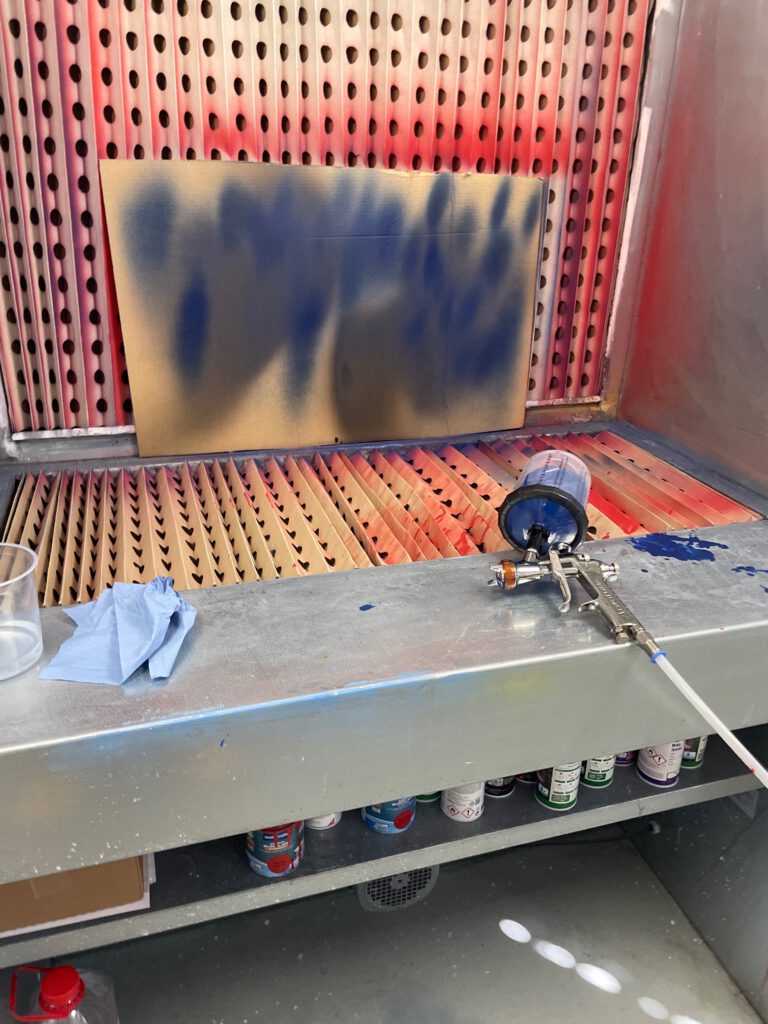
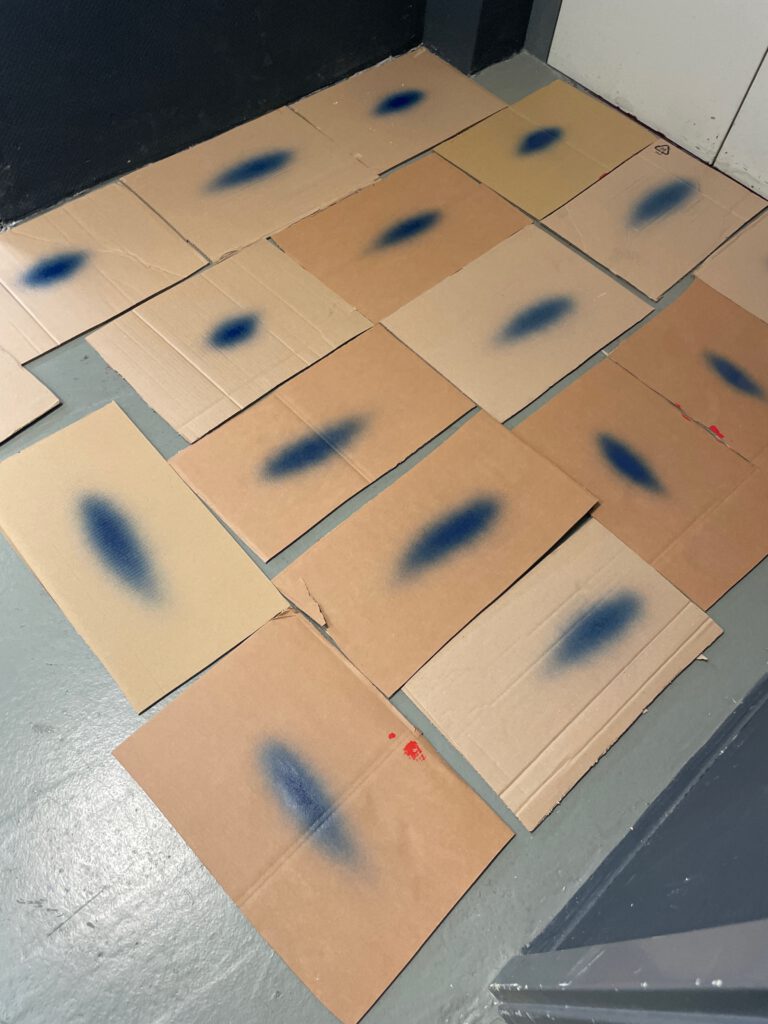
SprayConeAI is designed for images in which the spray pattern is clearly visible against the background.
Suitable images may include:
- spray patterns on paper,
- paint patterns on test cards,
- water spray images,
- nozzle test images,
- spray gun adjustment patterns,
- laboratory spray experiments,
- industrial spray documentation.
For reliable results, the image should have good contrast and even lighting.
Does SprayConeAI require special equipment?
No special measurement instrument is required for the basic analysis.
Users normally need:
- a spray pattern image,
- a computer, tablet, or smartphone,
- an internet browser,
- an optional calibration reference.
The image can come from a camera or smartphone. However, a stable camera position and controlled lighting improve the repeatability of the analysis.
Can SprayConeAI measure real dimensions?
SprayConeAI can evaluate dimensions when the image contains a suitable calibration reference.
For this purpose, users can place a calibration sticker, ruler, or another object with a known size next to the spray pattern. The software can then convert pixel dimensions into physical units.
Without calibration, SprayConeAI can still compare relative dimensions and pattern shapes.
What results does SprayConeAI provide?
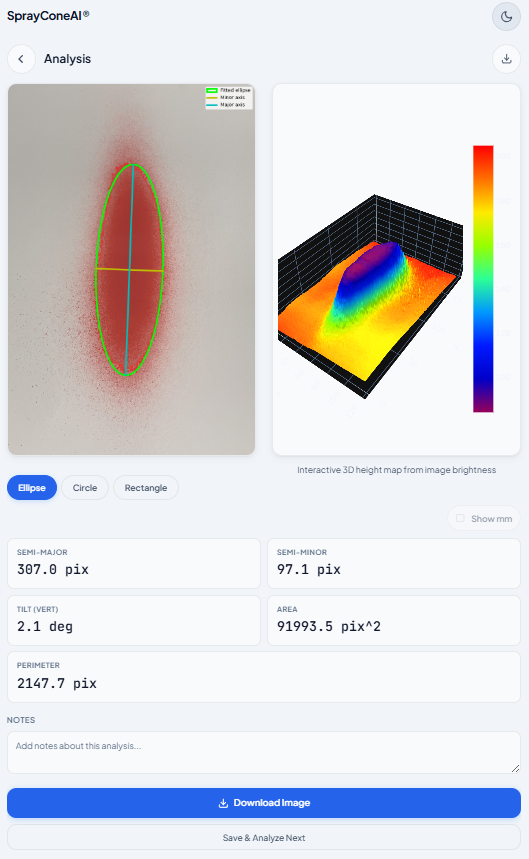
Depending on the software version and selected analysis mode, SprayConeAI can provide information such as:
- detected spray area,
- spray pattern outline,
- pattern width and height,
- geometric center,
- spray pattern symmetry,
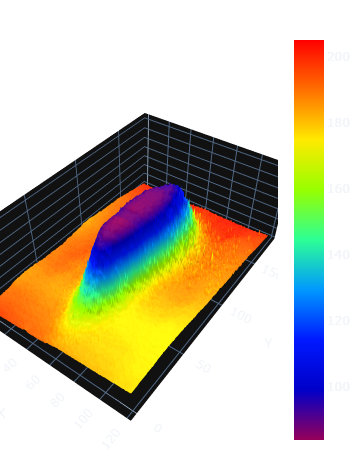
- relative intensity or coverage distribution,
- comparison between several spray images,
- visual overlays,
- exportable analysis results.
These results help users document changes in the spray pattern and compare different operating conditions.
What distinguishes SprayConeAI from manual spray pattern analysis?
Manual spray pattern evaluation often depends on personal judgement. Two users may interpret the same spray image differently.
SprayConeAI applies the same analysis approach to each image. Therefore, it supports a more consistent and repeatable evaluation.
In addition, the software can reduce the time required for:
- measuring pattern dimensions,
- marking the spray boundary,
- comparing test images,
- preparing reports,
- documenting nozzle adjustments.
Is SprayConeAI a droplet measurement system?
No. SprayConeAI analyzes images of complete spray patterns. It does not directly measure the size, velocity, or composition of individual droplets.
For individual droplet measurements, optical measurement systems such as SprayQuantAI or ParticleTensorAI may be more suitable.
Therefore, SprayConeAI complements high-resolution droplet measurement technologies rather than replacing them.
What is the difference between SprayConeAI and SprayQuantAI?
SprayConeAI and SprayQuantAI focus on different measurement levels.
SprayConeAI analyzes the visible shape and distribution of the complete spray pattern.
SprayQuantAI records and evaluates light-scattering signals from individual droplets in an optical measurement volume.
In simple terms:
- SprayConeAI evaluates the macroscopic spray pattern.
- SprayQuantAI analyzes individual droplet events.
The two approaches can support each other in nozzle development, spray optimization, and process monitoring.
What is the difference between SprayConeAI and ParticleTensorAI?
SprayConeAI evaluates camera images of visible spray patterns.
ParticleTensorAI, in contrast, analyzes time-resolved optical detector signals as tensors. It uses AI-based methods to identify patterns in recorded light-scattering data.
Therefore:
- SprayConeAI works mainly with spray images.
- ParticleTensorAI works mainly with optical signal sequences.
Can SprayConeAI compare different spray conditions?
Yes. Users can analyze images recorded under different operating conditions and compare the results.
For example, SprayConeAI can support comparisons of:
- different nozzles,
- different air pressures,
- different liquid pressures,
- different flow rates,
- different spray distances,
- different spray gun settings,
- stable and unstable operating conditions.
For meaningful comparisons, users should keep the camera position, lighting, background, and image scale as consistent as possible.
Can SprayConeAI analyze pneumatic spray patterns?
Yes. The current analysis approach is particularly suitable for spray patterns from pneumatic atomizers and spray guns.
These spray patterns often appear as elliptical, circular, or fan-shaped distributions on a test surface. SprayConeAI can help identify their boundaries and compare their geometry.
Can SprayConeAI analyze patterns from rotary atomizers?
Rotary atomizers often create ring-shaped or donut-shaped spray patterns. These patterns require a different evaluation approach from conventional pneumatic spray patterns.
Support for additional pattern types, including ring-shaped distributions, can be added or extended in future software versions.
Are uploaded images stored on a server?
The software is designed to process spray images without using them as a permanent image archive.
However, users should always check the current privacy information and terms of use before uploading confidential industrial images.
For sensitive applications, users should avoid including company names, machine details, product information, or other confidential content in the image.
Can SprayConeAI be used for industrial quality control?
SprayConeAI can support quality control by providing a consistent method for comparing spray patterns.
Possible applications include:
- nozzle inspection,
- spray gun setup,
- detection of blocked or damaged nozzles,
- documentation of maintenance results,
- comparison before and after cleaning,
- monitoring of spray pattern stability.
The suitability for an industrial process depends on the required accuracy, image conditions, calibration, and process integration.
Can SprayConeAI be adapted to a specific application?
Yes. The analysis workflow can be adapted to specific spray patterns, image conditions, or customer requirements.
Possible adaptations include:
- special spray pattern geometries,
- customer-specific image backgrounds,
- automated image processing,
- defined pass and fail limits,
- individual report formats,
- data export,
- connection to external software,
- integration into a quality-control workflow.
Before an adaptation, the application, image format, spray geometry, and required results should be evaluated.
Does SprayConeAI use artificial intelligence?
SprayConeAI can combine classical image processing with AI-assisted analysis.
Classical methods may identify edges, areas, shapes, and intensity distributions. AI methods can support the recognition of more complex patterns or improve the analysis under changing image conditions.
However, the selected method depends on the software version and application.
Do I need to install software?
SprayConeAI is designed as a web-based application. Therefore, users can access it through a compatible internet browser without installing a complete desktop program.
This approach makes it easy to test the software on different devices and operating systems.
Is SprayConeAI free to use?
The availability of free functions, extended analysis options, or customer-specific versions may depend on the current service model.
Users should check the SprayConeAI website for the latest information about available functions, access conditions, and commercial options.
Where can I find technical information?
Technical information, application examples, instructions, and updates can be published directly on the SprayConeAI website.
Additional information may include:
- image preparation guidelines,
- calibration instructions,
- example analyses,
- supported spray pattern types,
- software updates,
- privacy information,
- frequently asked questions.
Who develops SprayConeAI?
SprayConeAI is developed as a digital tool for spray pattern analysis by ai-quanton.
The software combines experience in spray diagnostics, optical measurement technology, image processing, and AI-assisted data analysis.
How can I start an analysis?
Open the SprayConeAI web application, upload a suitable spray pattern image, and select the available analysis settings.
For the best results:
- use a uniform background,
- avoid shadows and reflections,
- keep the camera perpendicular to the test surface,
- use consistent lighting,
- include a calibration reference when physical dimensions are required,
- record comparison images under the same conditions.