
SprayQuantAI® (SQA) is an optical measurement system for the time-resolved characterization of individual droplets in sprays and flows. The system combines the classical [1] and AI-based [2][3] TSTOF measurement principles. It consists of a Measurement Probe (MSO), a Control Unit (CU), and software.
During operation, the MSO probe detects optical signals from individual droplets. The CU then processes these signals and calculates droplet size, droplet velocity, and droplet number. Finally, the system sends the measurement results to the host HMI or provides them through an analog interface.
Measurement Principle and Scientific Background
The TSTOF measurement principle forms the technical basis of SprayQuantAI®. Reference [1] describes the classical TSTOF method. In addition, references [2] and [3] describe AI-based analysis of light-scattering signals.
MSO – Measurement Probe
Optical Measurement
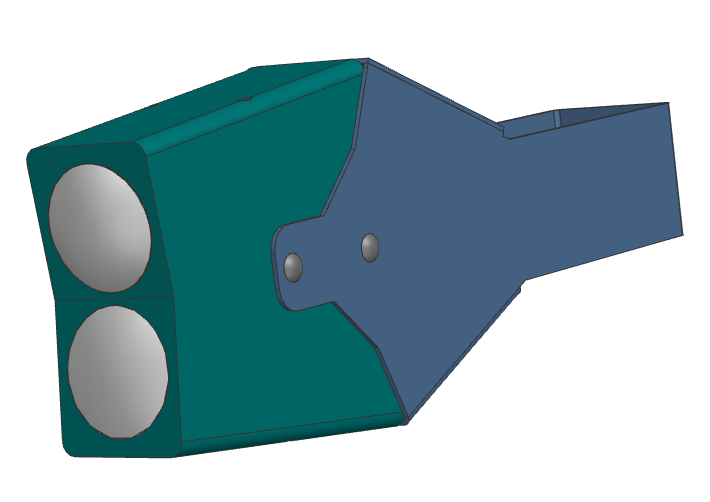
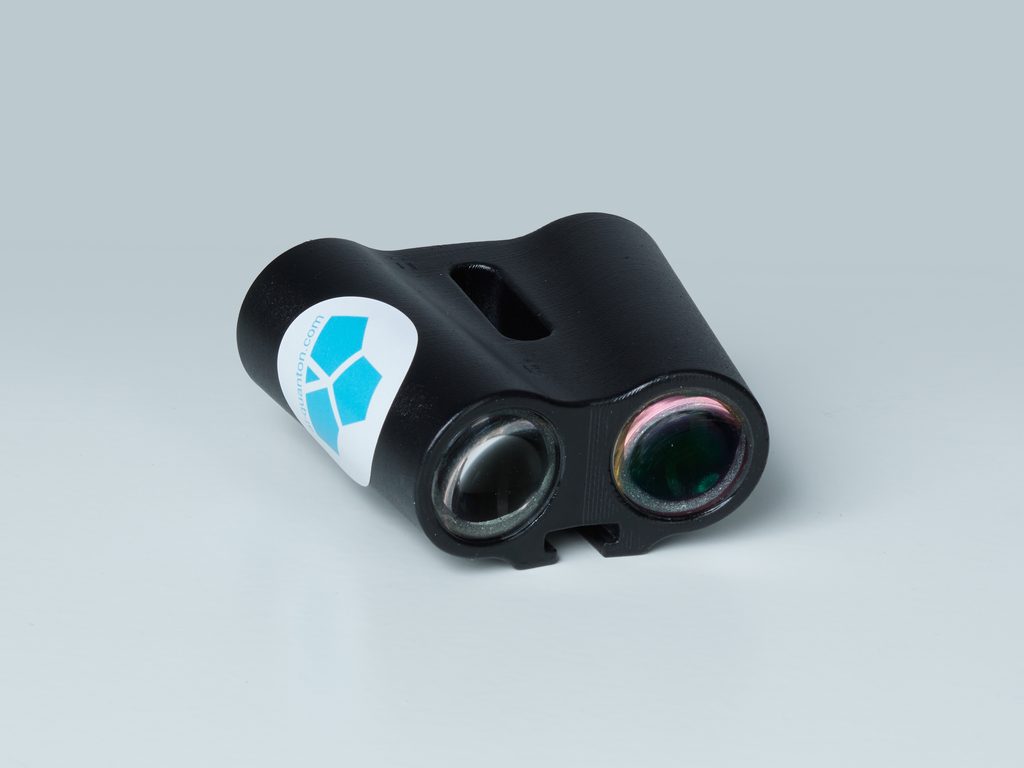
MSO is the optical sensing component of SprayQuantAI®. During a measurement, individual droplets pass through the optical measurement region and generate light-scattering signals. The system uses these signals to determine droplet size, velocity, and number.
In addition, the AI approach can determine the composition of droplets from the structure of the light-scattering signal [3]. Furthermore, variation of the MSO position allows the system to estimate droplet trajectories [4].
The MSO supports different optical configurations for different measurement distances: 62.4 mm, 125 mm, and 250 mm. The intended droplet measurement range starts at approximately 2 µm. Moreover, the velocity range extends up to 250 m/s.
MSO Technical Specifications
| Parameter | Specification |
|---|---|
| Measurement principle | Incoherent light scattering + TSTOF |
| Measurement object | Individual droplets in sprays and flows |
| Measured quantities | Droplet size, velocity, number, opacity, and concentration |
| Signal processing | Classical and AI-assisted processing |
| Minimum droplet size | > 2 µm |
| Maximum droplet velocity | < 250 m/s |
| Working distance | 62.5 mm, 125 mm, or 250 mm depending on the optical configuration |
| Laser wavelength | 405–450 nm depending on the configuration |
| Laser power | 3 mW, 5 mW, or 10 mW |
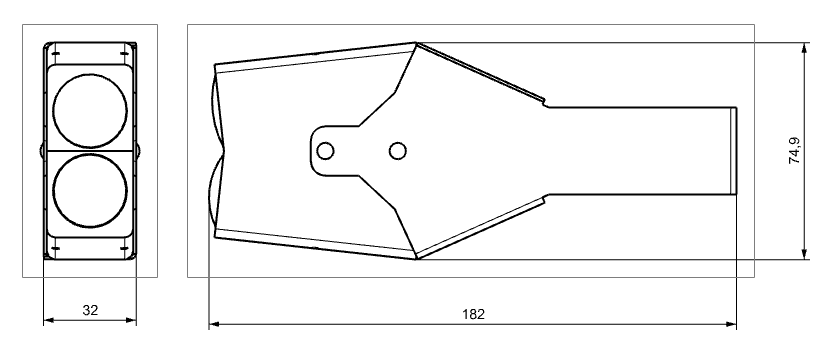
| Overall length | 182 mm |
| Maximum height | 74.9 mm |
| Front width | 32 mm |
CU – Control Unit
Signal Processing and System Integration
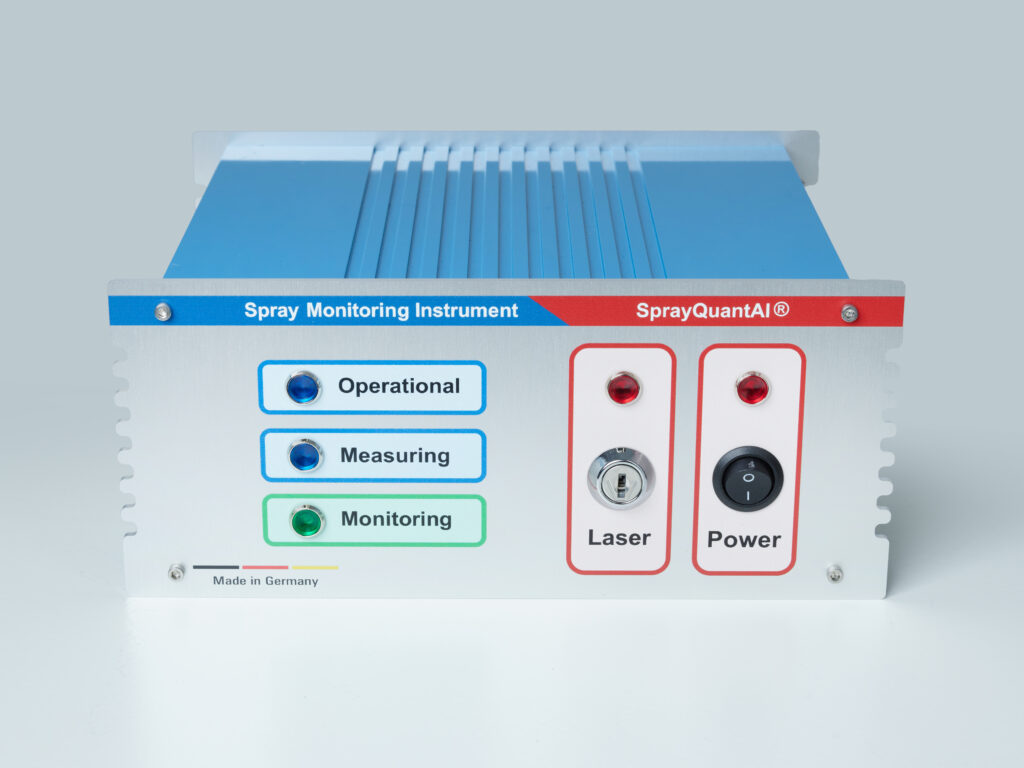
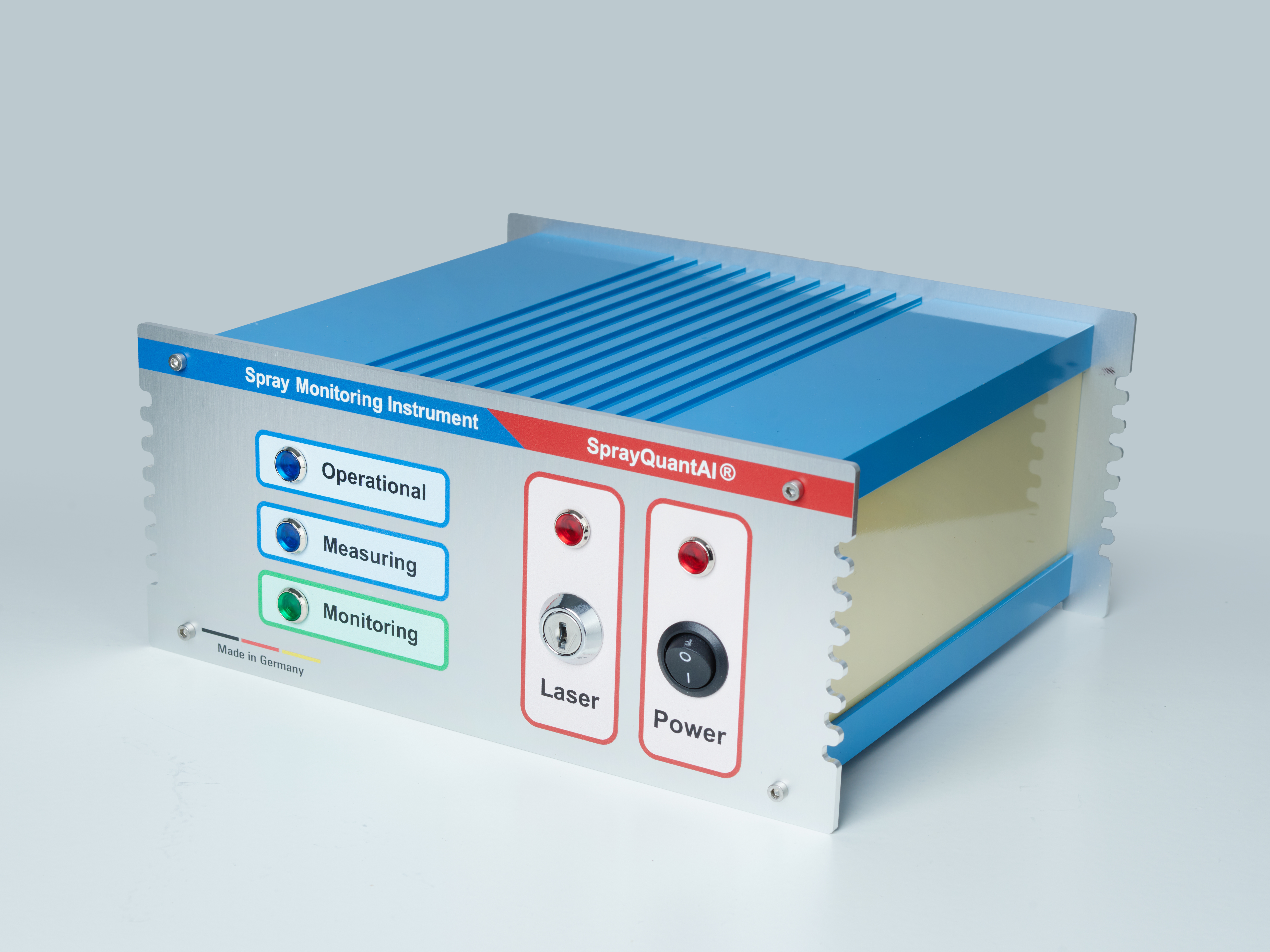
CU serves as the central signal-processing and system-control component. It receives the optical measurement signals from the MSO probe and processes them internally.
The Control Unit calculates the measurement parameters, including droplet size, velocity, number, and opacity. It then sends the resulting data to the host computer through Ethernet.
At the same time, the CU provides measurement results through an analog 4–20 mA interface. In addition, digital I/O interfaces support integration into test benches, automation systems, and industrial processes.
Control Unit Technical Specifications
| Parameter | Specification |
|---|---|
| Main function | Measurement signal processing and system control |
| Calculated quantities | Droplet size, velocity, number, and composition |
| Host communication | Ethernet |
| Digital interface | 4 x digital inputs (24 V) 4 x digital outputs (24 V) |
| Analog interface | 4 x analog inputs (4–20 mA) 4 x analog outputs (4–20 mA) |
| Host system | Windows computer with Ethernet connection |
| Measurement data output | CSV via SprayQuantAI® software Analog interface (4–20 mA) |
| Operational indicator | Indicates that the optical and measurement hardware is ready for operation |
| Measuring indicator | Indicates active measurement-data acquisition |
| Monitoring indicator | Indicates monitoring operation where supported by the selected configuration |
| Laser indicator | Indicates that the laser-driver power supply is active |
| Power indicator | Indicates that the Control Unit is switched on |
| Laser key | Enables the laser-driver power supply |
| Power switch | Controls the main power supply of the Control Unit |
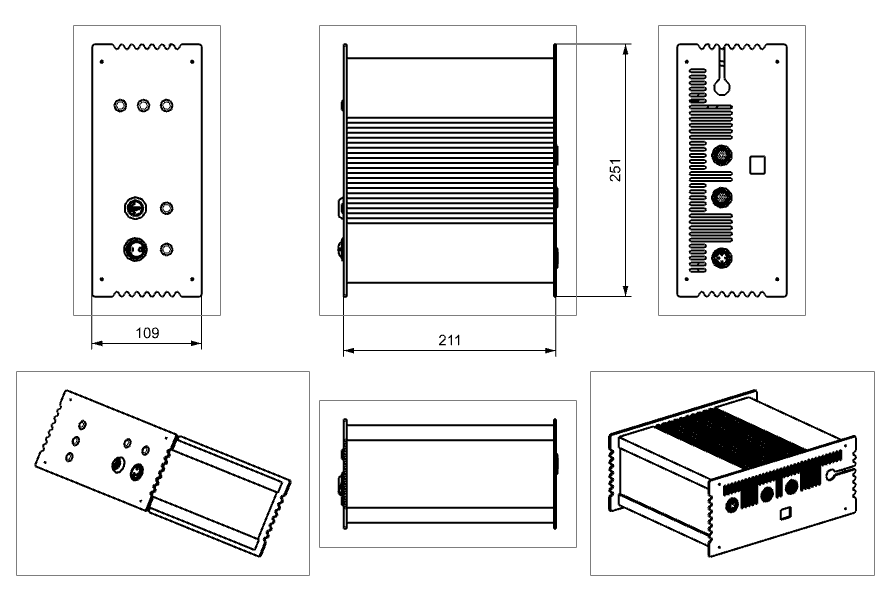
| Width | 251 mm |
| Depth | 211 mm |
| Height | 109 mm |
Software
Measurement Processing and Visualization
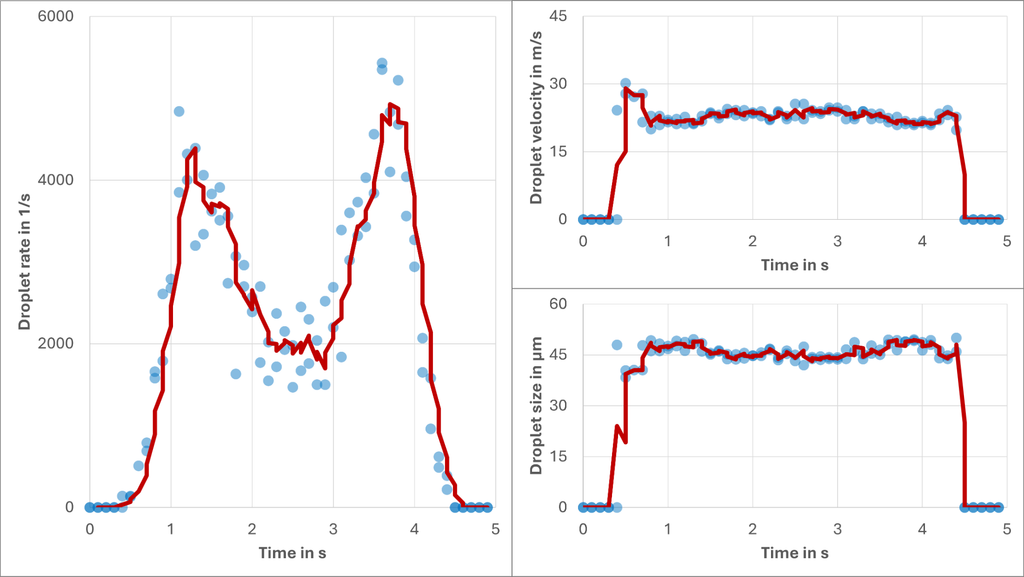
SprayQuantAI® measurement software is written in C++ and runs on a low-power HMI. The Control Unit performs all measurement calculations and communicates with the HMI through Ethernet.
Therefore, the software can focus on measurement visualization, system configuration, and measurement-data storage. For subsequent analysis, the software stores measurement values in CSV format.
The standard measurement-data structure contains: date, time, size, velocity, and number.
Technical Demonstrations
The following videos show SprayQuantAI® in practical measurement and monitoring applications.
References
[1] Schaefer, W., Li, L., Stegmann, P., & Terada, M. (2026). Technical report on the TSTOF measurement method: Technical basics. Photonics, 13(1), 56. https://doi.org/10.3390/photonics13010056
[2] Schaefer, W., & Li, L. (2024). Particle characterization by analyzing light scattering signals with a machine learning approach. Applied Optics, 63(29), 7701–7711. https://doi.org/10.1364/AO.531346
[3] Walter Schäfer, Egor Goldenberg, Magd Fekri Shaif Al-Naggar, Wladimir Schaufler,
AI-assisted determination of refractive index and mass concentration of individual spray droplets using TSTOF light-scattering signals, International Journal of Heat and Fluid Flow, 2026, 110417, ISSN 0142-727X, https://doi.org/10.1016/j.ijheatfluidflow.2026.110417.
[4] Schäfer, W. Neues optisches Messverfahren für Rotationszerstäuber. J Oberfl Techn 66, 52–53 (2026). https://doi.org/10.1007/s35144-026-3895-3