DE102023134228A1 describes a method and a device for characterizing particle properties by evaluating a scattered light signal with a machine learning model. The key idea is the reduction of the primary apparatus: a complex optical measurement system is needed only to train the model. The measurement itself then works with much simpler hardware.
From Primary Apparatus to Reduced Apparatus
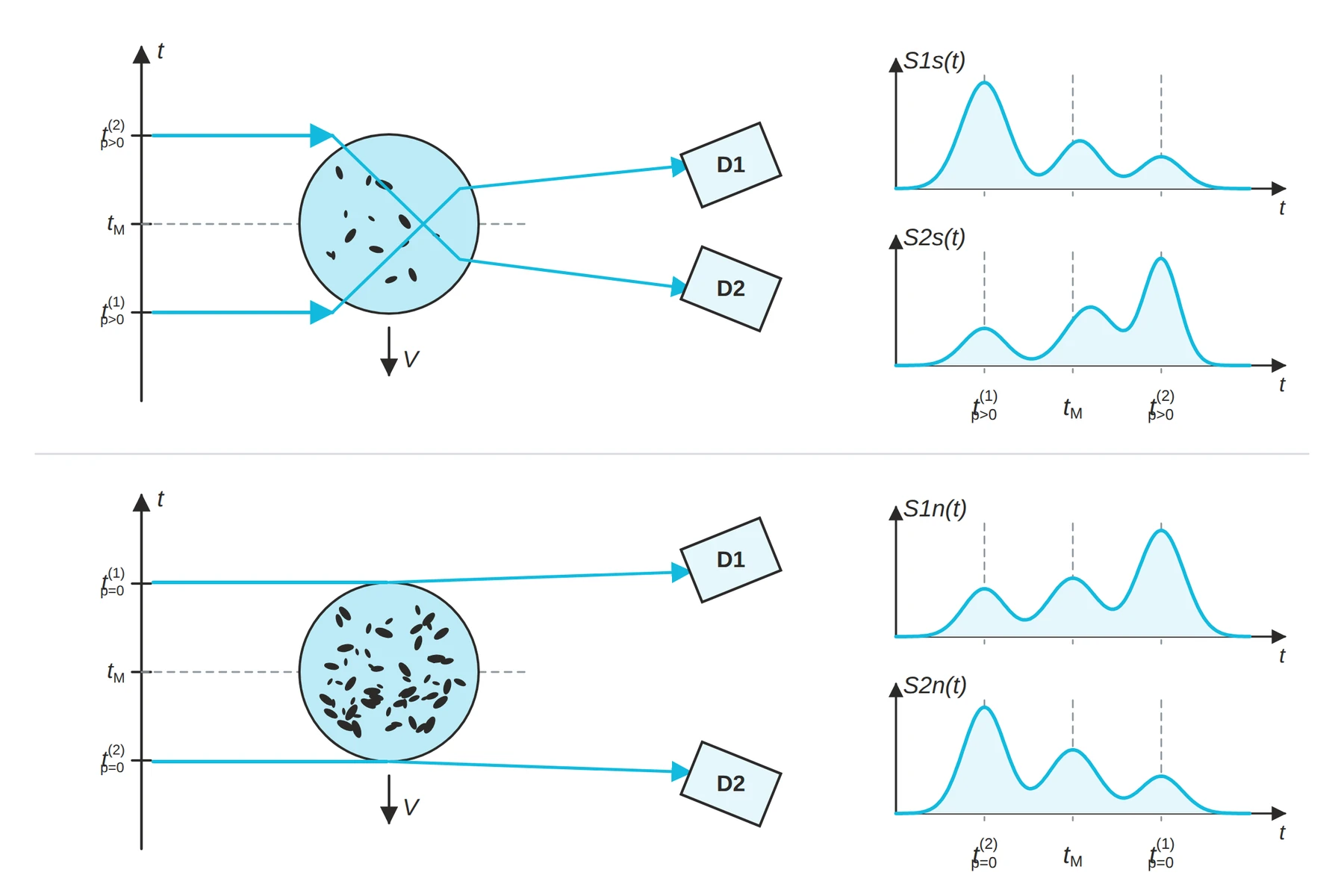
The primary apparatus combines the time-shift technique and the time-of-flight technique. It uses two light sources and four detectors. Each particle that crosses the measurement volume produces four time-resolved scattered light signals. From these signals, particle size, velocity and refractive index are determined with established signal evaluation.
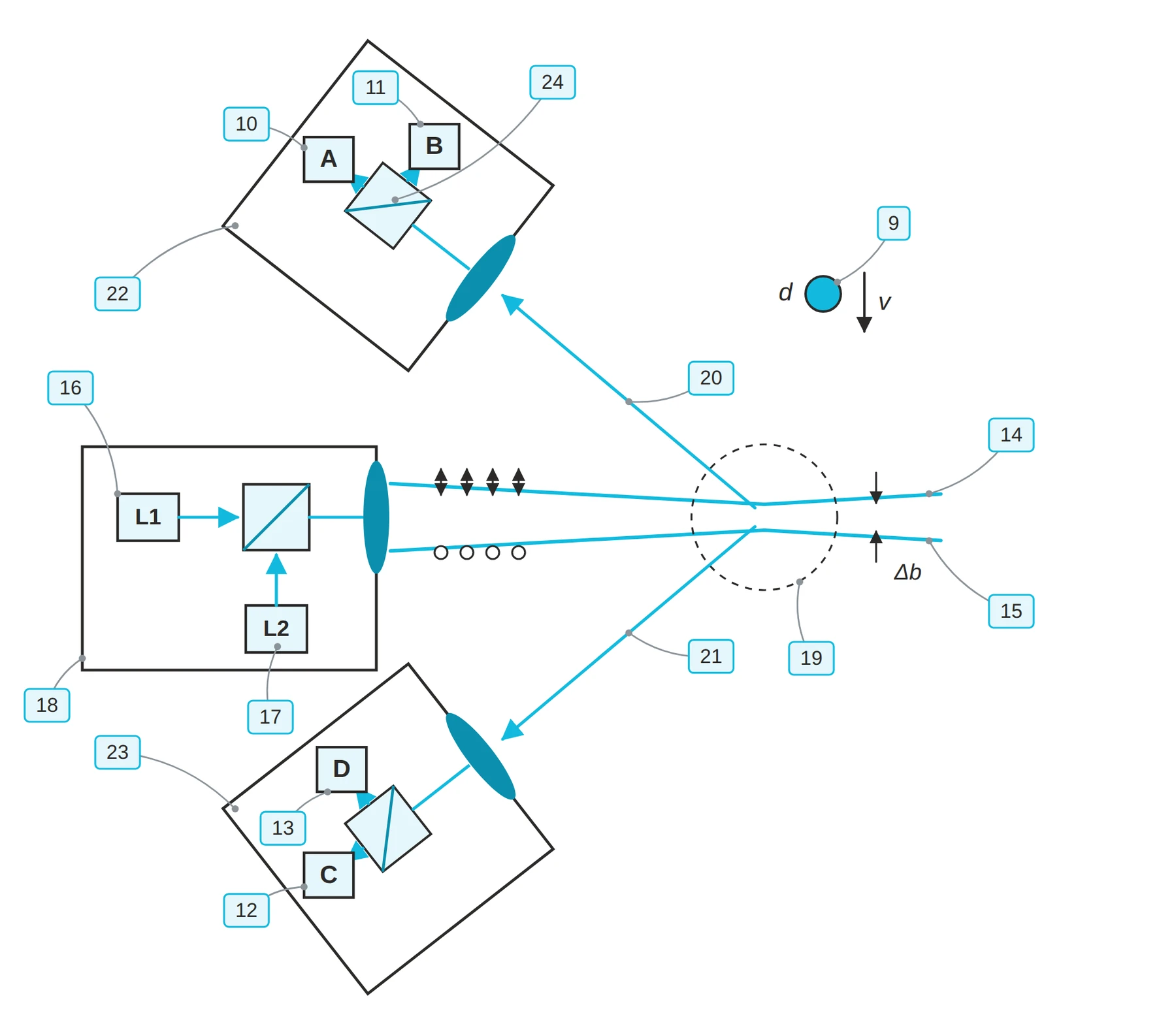
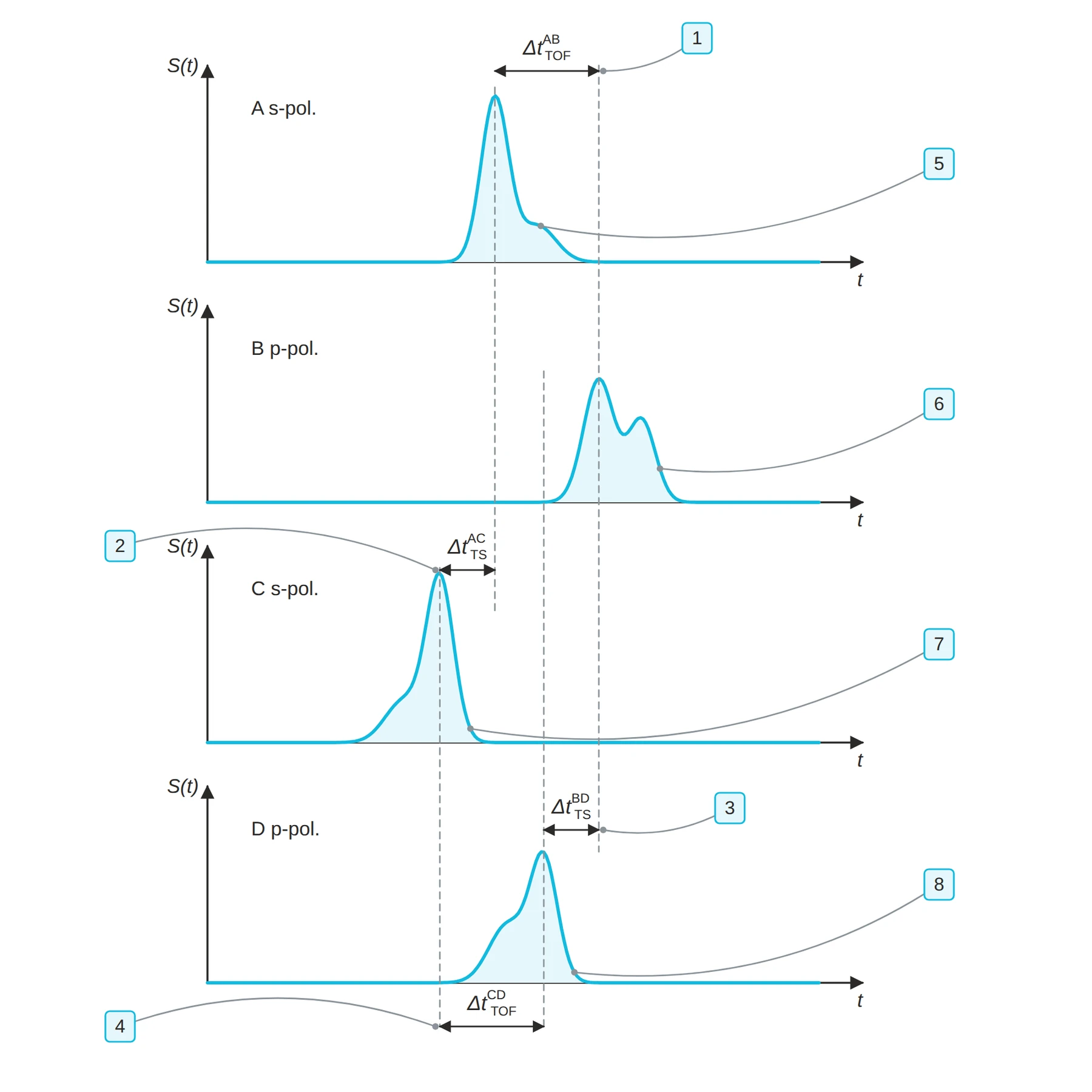
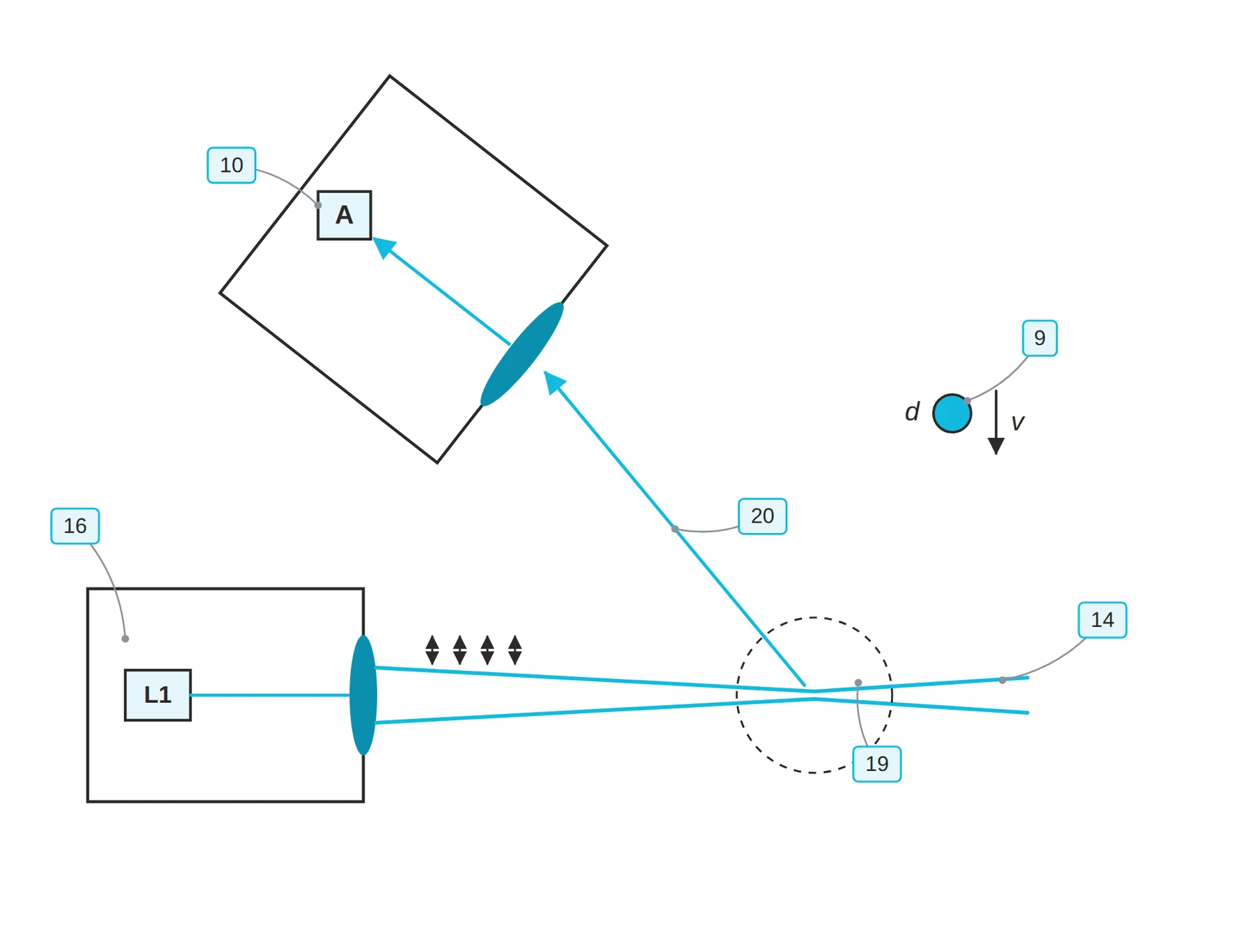
These results serve as reference values. A machine learning model learns the relationship between the shape of one selected scattered light signal and the particle properties. After training, a reduced apparatus with only one light source and one detector records a single signal. The trained model determines the particle properties from this signal.
Why Machine Learning?
Real scattered light signals differ from idealized mathematical models. The optical setup is never fully known, particle parameters vary, and the flow adds random disturbances. Classical evaluation uses only a few signal features, such as peak positions. A trained model evaluates the complete signal shape and learns from real measurement data, including its noise and uncertainties.
Advantages
- Fewer optical components: one light source and one detector instead of two light sources and four detectors
- Compact and cost-effective measurement instruments
- Simultaneous determination of particle size, velocity and refractive index
- Training on real measurement data instead of idealized models
Applications
The method is suited to spray characterization, for example in coating processes, injection systems, agricultural spraying and medical aerosols. It also supports quality control and compact, portable systems for particle measurement. For ai-quanton, the patent is a basis for AI-based measurement systems such as SprayQuantAI® and ParticleTensorAI®.