


At DECHEMA 2026 in Frankfurt (in German: Jahrestreffen der DECHEMA/VDI-Fachgruppen Kristallisation und Trocknungstechnik 2026), we presented a new AI-assisted method for the characterization of droplets and particles. The work focuses on continuous light scattering signals and their evaluation with ParticleTensorAI.
ParticleTensorAI® converts optical detector signals into tensor-based data formats. Artificial intelligence can then analyze these data structures. As a result, the method opens a new path for spray diagnostics, slurry droplet analysis, and particle characterization.
https://dechema.de/JTR_KRI_TRO_2026.html
Why This Method Is Important
Classical TSTOF measurement can determine droplet size and velocity. It does this by analyzing individual light scattering signals in counting mode. However, many industrial sprays contain more information than size and velocity alone.
For example, slurry droplets may contain particles. Coating droplets may contain pigments. Liquid mixtures may have different refractive indices. Therefore, advanced spray diagnostics need methods that can also detect material-related properties.
From Light Scattering Signals to ParticleTensorAI®
ParticleTensorAI uses continuous detector signals instead of only triggered single-droplet events. This keeps more information from the original optical signal stream.
In a practical implementation, several detector signals are mapped into image-like tensor structures. For example, three detector channels can form RGB images. Each color channel represents one optical signal.
These tensor images can then be analyzed with modern AI methods, especially convolutional neural networks. In this way, ParticleTensorAI® combines optical measurement technology with AI-assisted signal evaluation.

Slurry Droplet Analysis with CNN Models
The presented work focuses on slurry droplets and particle-loaded sprays. First, continuous light scattering signals from multiple detectors were recorded. Then, the signals were segmented and converted into ParticleTensorAI representations.
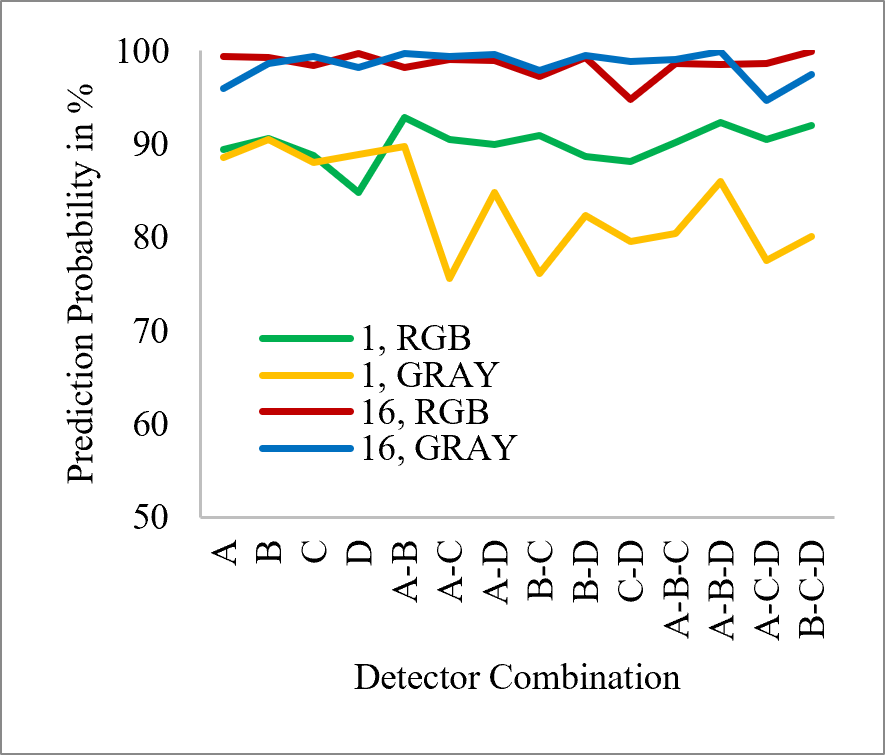
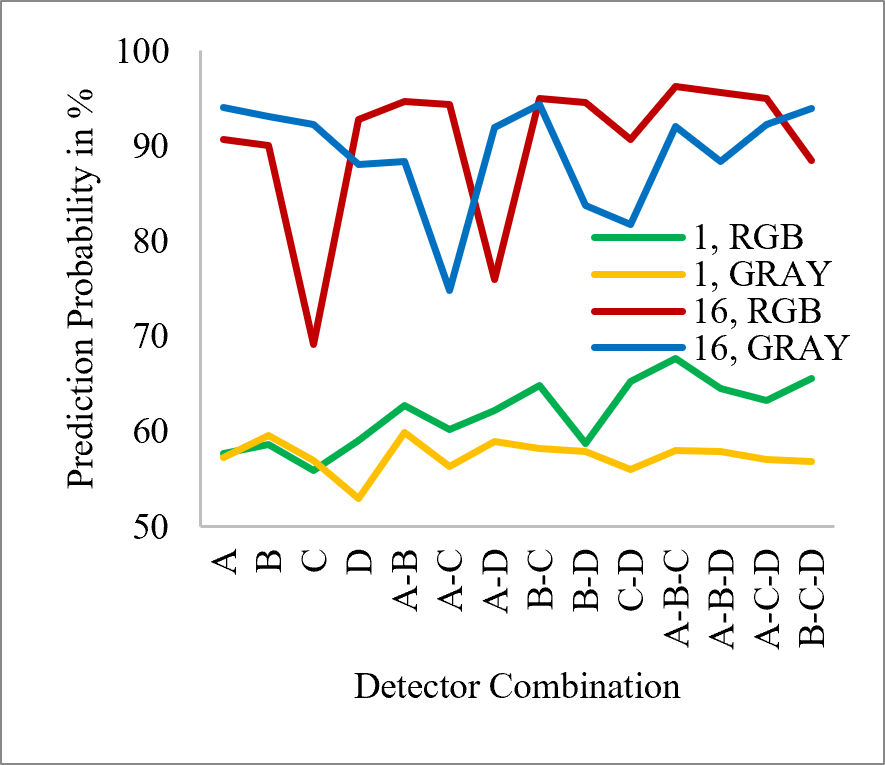
After that, convolutional neural networks analyzed the data. The models predicted mass concentration and mean particle size in slurry droplets. They were used in both classification and regression modes.
The analysis also included different detector combinations and several downsampling factors. This showed that tensor-based signal structures can provide robust information about particle-related properties inside droplets.
Prediction of Mass Concentration and Particle Size
ParticleTensorAI® enables the prediction of mass concentration and mean particle size from optical light scattering data. In the presented experiments, the method achieved prediction accuracies of up to 95%.
This result shows that continuous light scattering signals contain valuable material information. With AI-assisted evaluation, this information can support the analysis of complex droplets, slurry sprays, particle-loaded liquids, and coating materials.
In addition, the method showed that downsampling can reduce the data rate without strongly reducing prediction accuracy. This is important for future real-time applications and industrial monitoring systems.
Advantages for Spray Diagnostics and Process Monitoring
ParticleTensorAI combines the advantages of counting methods and integrating methods. It keeps time-resolved information from the optical signal. At the same time, it analyzes the collective behavior of many droplets and particles.
Therefore, the method is useful when classical single-droplet analysis is not sufficient. Examples include slurry sprays, pigment-loaded coatings, crystallization processes, complex liquids, and multiphase flows.
By using tensor-based spray diagnostics, researchers and engineers can extract more information from optical measurement data. This supports process understanding, quality control, material characterization, and AI-assisted spray monitoring.
Outlook
ParticleTensorAI creates a foundation for future work in spray diagnostics and particle characterization. Possible applications include pigment tone determination, crystallization analysis, multiphase flow characterization, and industrial coating process monitoring.
The method shows how optical measurement technology and artificial intelligence can work together. It extends classical TSTOF diagnostics and provides a new path toward intelligent, trigger-free, and material-sensitive spray analysis.