

This work was presented at the Jahrestreffen der DECHEMA/VDI-Fachgruppen Mehrphasenströmungen, Agglomerations- und Schüttguttechnik und Computational Fluid Dynamics, held at TU Dresden, Germany, from March 16 to 18, 2026. The contribution focuses on optical characterization of dynamic paint droplets in flight and presents a new method for monitoring the composition of droplets in a paint spray during the coating process.
https://tu-dresden.de/ing/maschinenwesen/ifvu/tpg/forschung/workshop
The quality of a coating depends strongly on the properties of the droplets produced during atomization. These dynamic paint droplets influence the homogeneity, color tone, transparency, and surface structure of the final coating. Therefore, a reliable method for analyzing individual droplets in flight can provide valuable information for coating process monitoring and quality control.
Optical Analysis of Paint Droplets in Flight
Modern coating processes are highly automated. However, there is still a strong need for measurement methods that can monitor the composition of individual paint droplets before they reach the substrate.
The presented method uses time-resolved light scattering signals from dynamic paint droplets. When a paint droplet passes through a shaped light beam, two or more detectors record the scattered light. The order, structure, and shape of these signals contain information about the optical behavior of the droplet.
This makes it possible to classify paint droplets as semi-transparent or non-transparent. By evaluating many droplet events statistically, the method can determine the relative number of semi-transparent droplets in the paint spray.
SprayQuantAI® for Paint Spray Diagnostics
The method is connected to SprayQuantAI®, an AI-assisted optical evaluation concept for spray monitoring and dynamic droplet analysis. In this work, SprayQuantAI® supports the characterization of paint droplets by analyzing their time-resolved light scattering signals.
This approach extends classical droplet measurement. It does not only focus on droplet size or velocity. Instead, it also provides information about droplet composition and transparency. This is especially important for complex coating materials, paint mixtures, and industrial coating process monitoring.
Correlation with Paint Composition
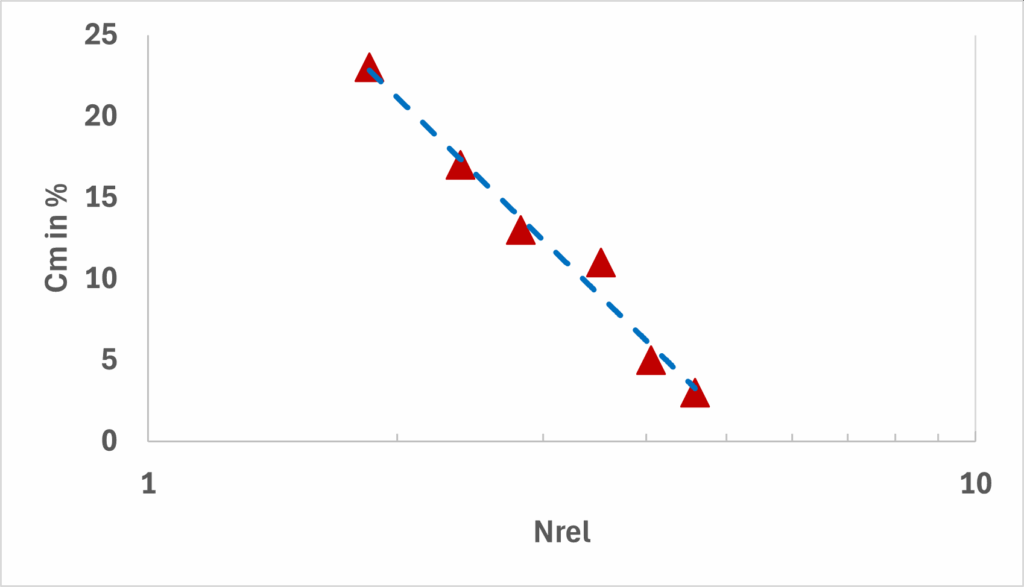
The experimental validation was carried out with paint droplets generated from materials with different weight ratios between basecoat and paint concentrate. The droplets were classified and counted according to their degree of transparency.
The results show a clear correlation between the paint mixing ratio and the relative number of semi-transparent paint droplets. As the proportion of paint concentrate increases, the number of semi-transparent droplets decreases.
This confirms that optical analysis of a paint spray can provide quantitative information about the composition of dynamic paint droplets. As a result, the method offers a new path for monitoring material behavior during the coating process.
Relevance for Industrial Coating Processes
The presented method can support coating process development, material characterization, paint formulation, and quality assurance. It helps users understand how changes in paint composition influence droplet behavior during atomization.
In industrial applications, this information can support real-time process monitoring. It can also help detect material changes, improve coating stability, and reduce defects in the final surface.
Application Potential
Paint spray characterization is relevant for automotive painting, surface coating, industrial spray painting, and the development of new coating materials. The method can also support research on semi-transparent paint particles, pigment-loaded droplets, and complex liquid sprays.
By combining optical light scattering analysis with SprayQuantAI®, this work creates a new approach for material-sensitive spray diagnostics. It shows how individual droplets in a paint spray can provide direct information about the coating process before the material reaches the surface.
