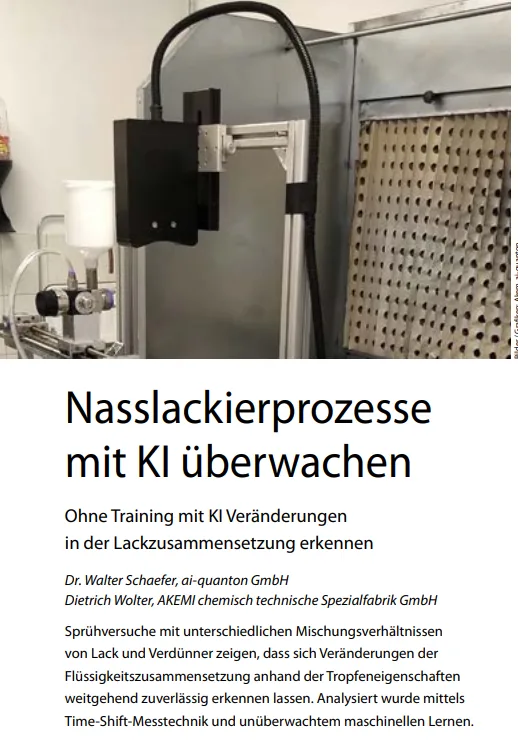
In issue 17/2026 of BESSER LACKIEREN (20 October 2026), the trade newspaper for industrial coating technology published our article “Wie ein Signal Geschwindigkeit und Größe verrät” – how a signal reveals velocity and size. It shows how a simplified model converts the light-scattering signals of individual paint droplets directly into droplet size and droplet velocity, enabling real-time monitoring of coating processes.
- Publication: BESSER LACKIEREN No. 17, 20 October 2026, section “Technologien”, page 7 (in German)
- Title: Wie ein Signal Geschwindigkeit und Größe verrät – Vereinfachtes Modell ermöglicht Echtzeit-Monitoring von Beschichtungsprozessen
- Authors: Dr. Walter Schäfer (ai-quanton GmbH), Hiroyuki Kakehata (ANEST IWATA Corp.), Masaru Terada (ABB Robotics K.K.)
Key Points of the Article
- Why measure droplets: In spray painting, measuring the droplets helps to run coating processes more stably and reproducibly. Because atomization is dynamic, meaningful process monitoring needs time- and space-resolved data – above all droplet size and droplet velocity.
- Compact TSTOF probes: In recent years, compact measurement probes based on the TSTOF principle have been developed with far fewer optical components. For many applications, analysing the light-scattering signals of individual droplets is sufficient to detect process changes and to monitor the coating process continuously.
- Everything from one signal: In the simplest optical configuration – one laser line and one detector – the diameter of a droplet follows from the amplitude and the temporal width of its light-scattering signal. The velocity is directly linked to the signal width: a faster droplet stays in the light field for a shorter time and produces a narrower signal.
- Calibration and extension: For more accurate absolute values, the model constants can be calibrated with reference measurements or optimized using historical measurement data. Where higher accuracy is required, the model can be extended by correction terms.
- No external computer: Droplet size and velocity can also be calculated with pre-trained AI models; this requires linking the probes with a TSTOF measurement instrument such as SpraySpy to create the models and still needs a separate computing unit. The simple model, by contrast, needs very little computing power and can be implemented directly in the hardware or firmware of the measurement probe.
Experimental Validation
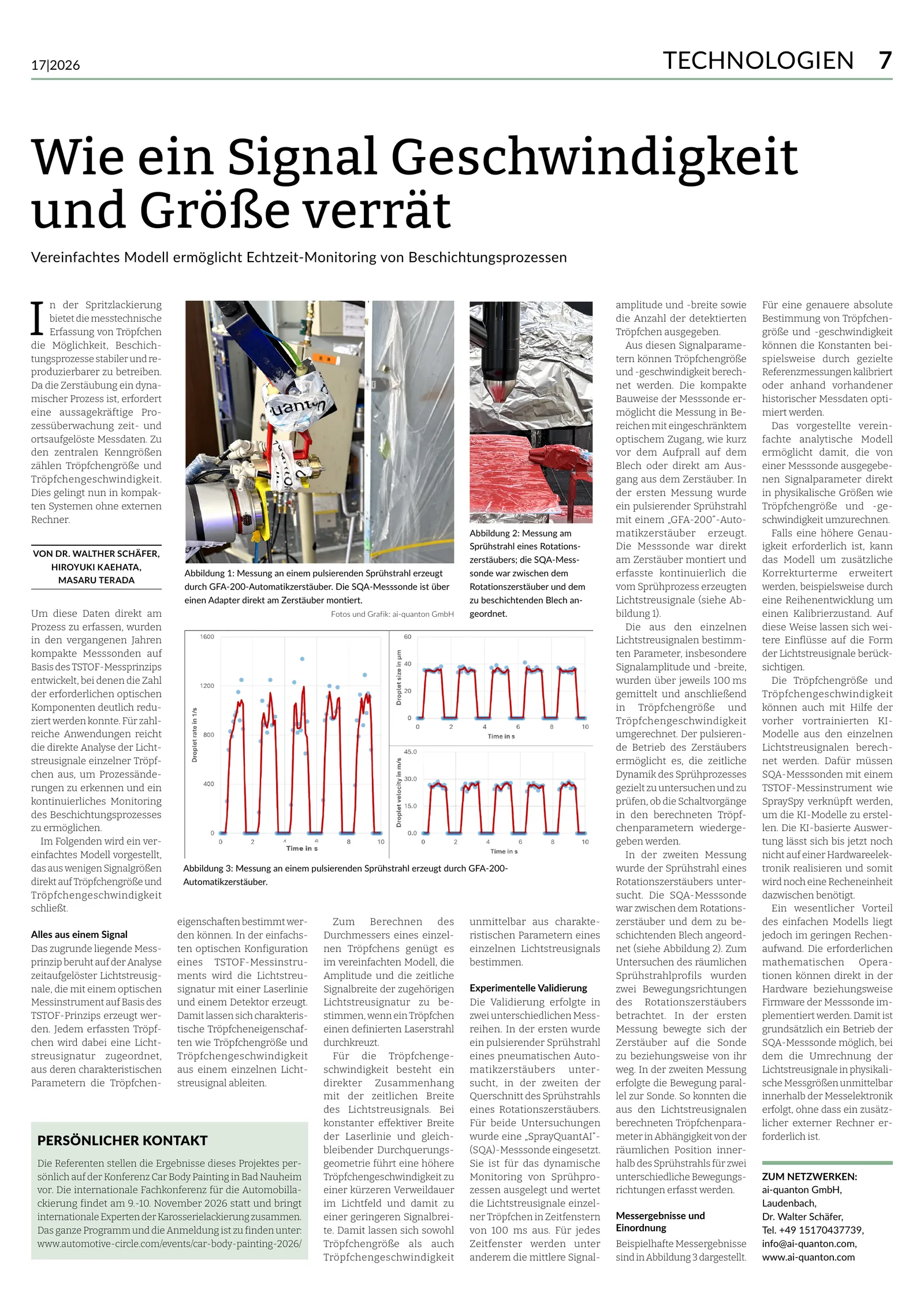
The model was validated in two series of measurements with a SprayQuantAI® (SQA) measurement probe, which is designed for dynamic monitoring of spray processes. The probe evaluates the light-scattering signals of individual droplets in time windows of 100 ms and outputs, among other things, the mean signal amplitude and width as well as the number of detected droplets. From these parameters, droplet size and droplet velocity are calculated.
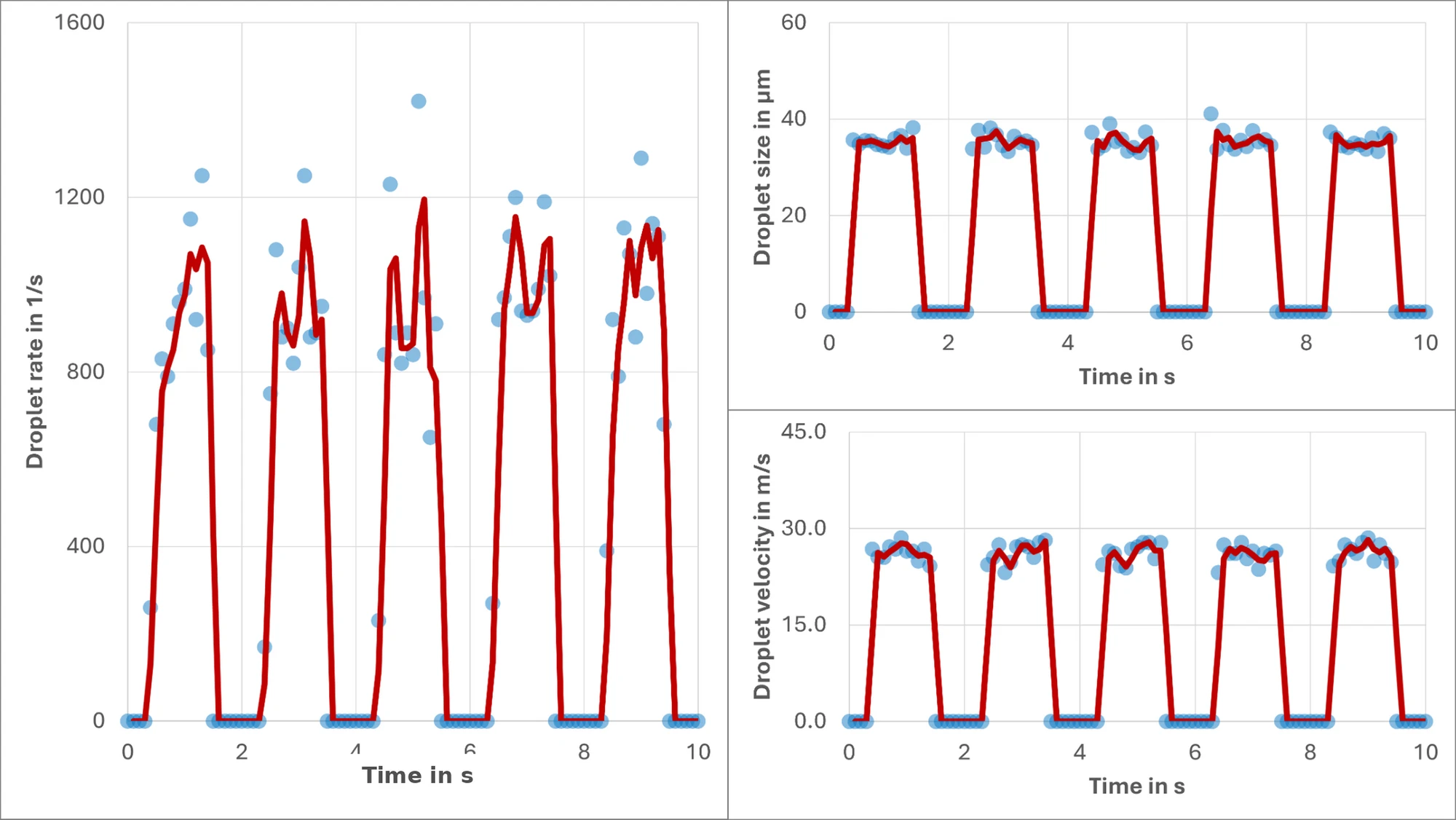
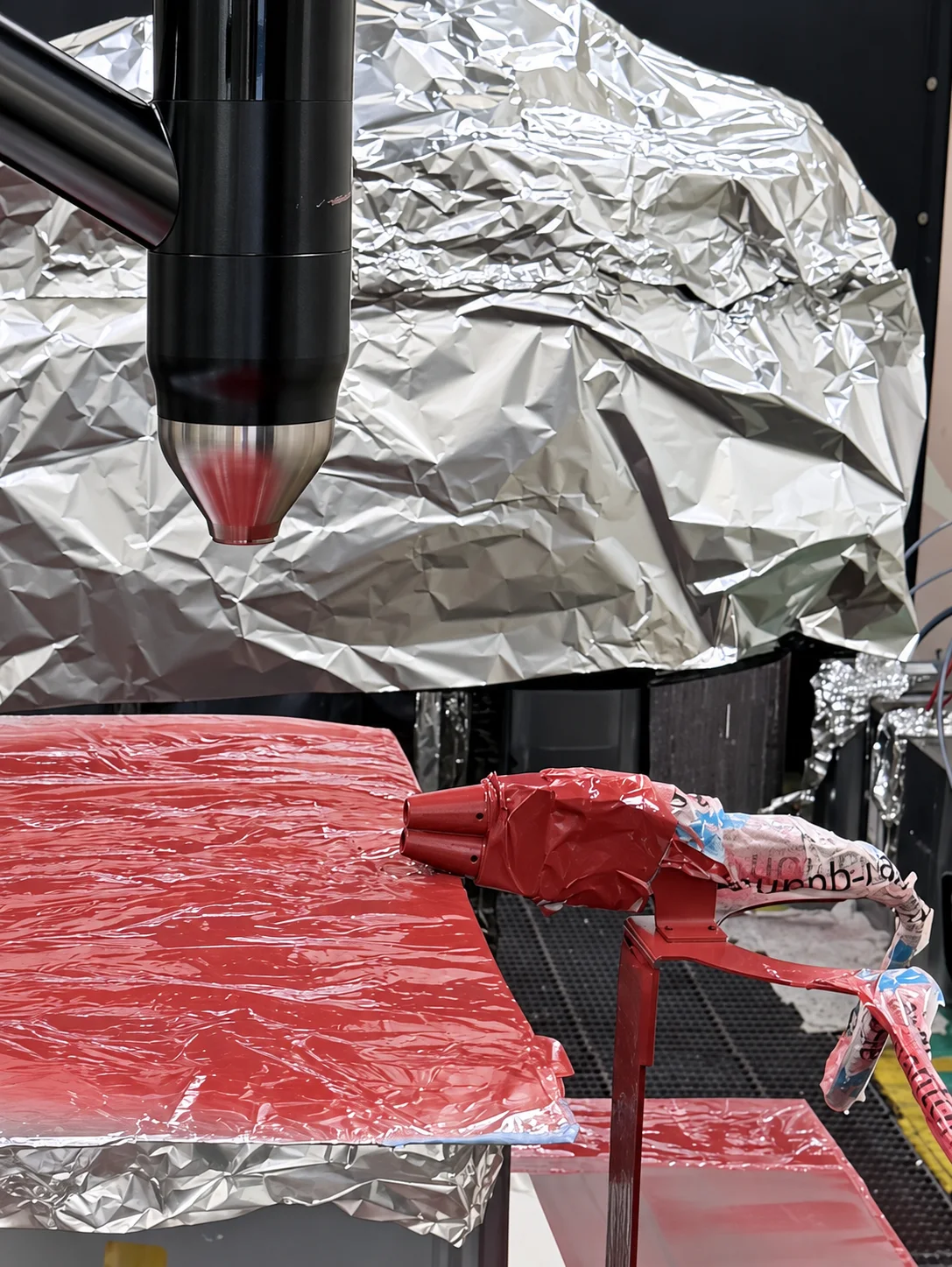
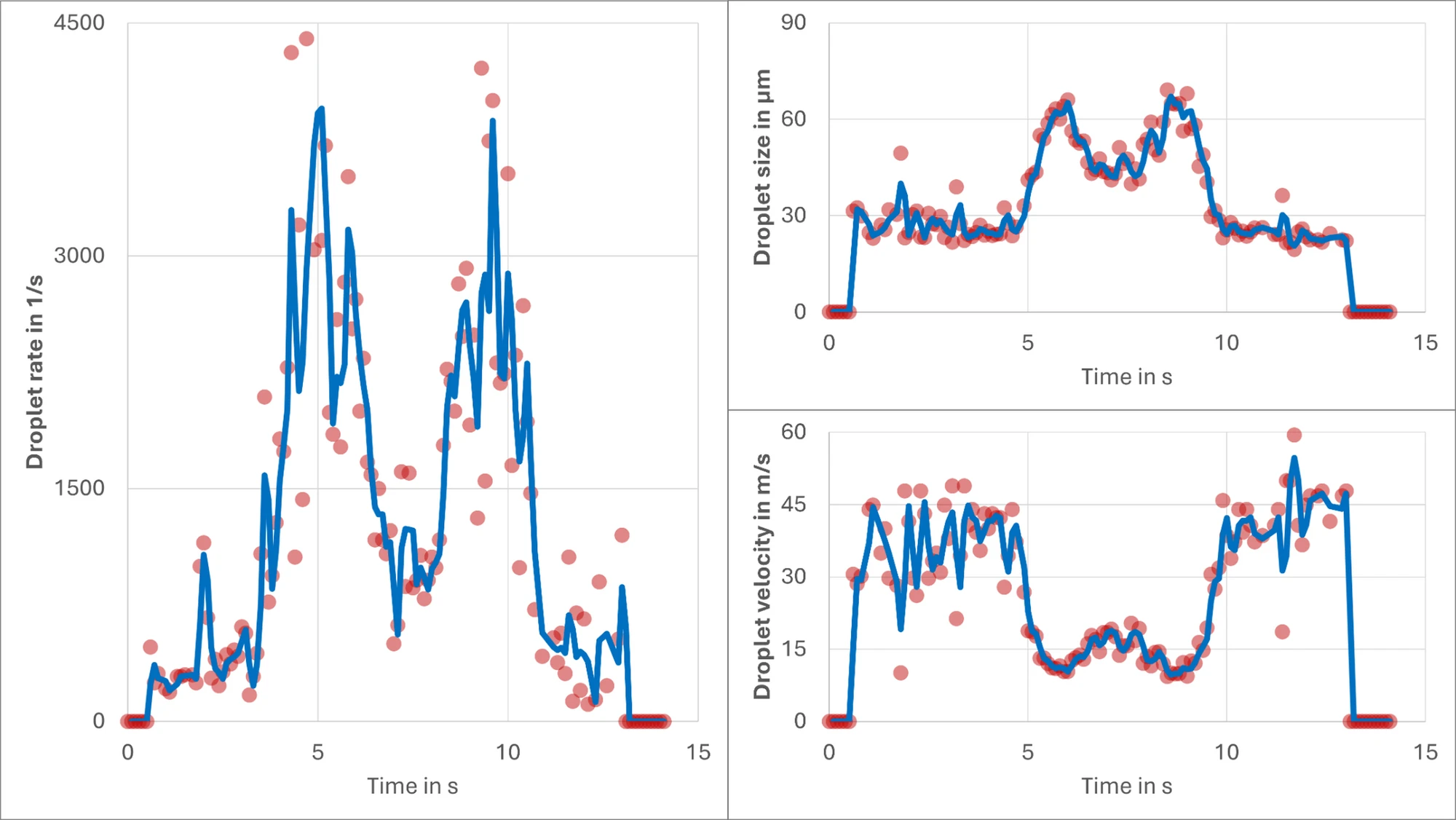
In the first series, the pulsed operation of the atomizer made it possible to examine the temporal dynamics of the spray process and to check whether the switching is reproduced in the calculated droplet parameters. In the second series, the spray of a rotary atomizer was examined; to capture the spatial spray profile, the atomizer was moved towards and away from the probe and parallel to it.
Meet Us at Car Body Painting 2026
The authors present the results in person at the Car Body Painting 2026 conference of Automotive Circle in Bad Nauheim on 9–10 November 2026. Contact: Dr. Walter Schäfer, info@ai-quanton.com.