

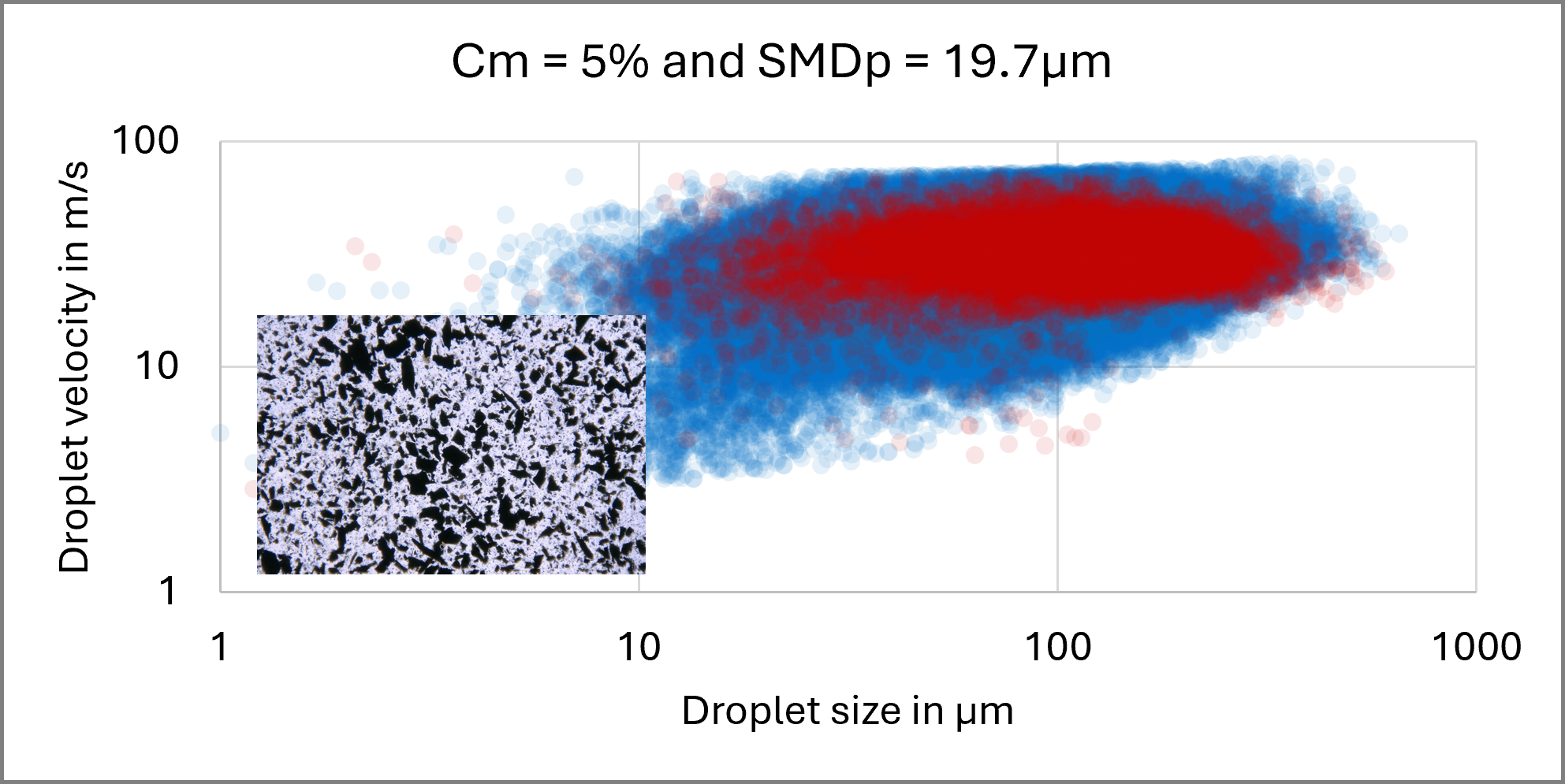
At the joint annual meeting of the DECHEMA and VDI expert groups in Clausthal-Zellerfeld, Germany, Walter Schäfer presented the poster “Optical Measurement Method for Monitoring Slurry Sprays.” The conference took place at Clausthal University of Technology from 25 to 27 March 2025. The poster presentation formed part of the Particle Measurement Technology program.
https://www.fg2025.tu-clausthal.de/
Why is slurry spray monitoring important?
Slurries contain solid particles suspended in a liquid. Their particle concentration and particle size distribution can strongly affect atomization, droplet formation, heat transfer, chemical reactions, and the stability of an industrial process.
These properties are particularly important in recycling, spray drying, energy conversion, coating, and other processes that handle heterogeneous feedstocks. However, conventional laboratory analyses often require sampling and cannot provide immediate information about changes inside an operating process.
Therefore, an optical slurry spray monitoring system could help identify changes in composition directly during atomization. This supports faster process adjustment, more efficient use of raw materials, and the development of more sustainable industrial processes.
Optical analysis of individual suspension droplets
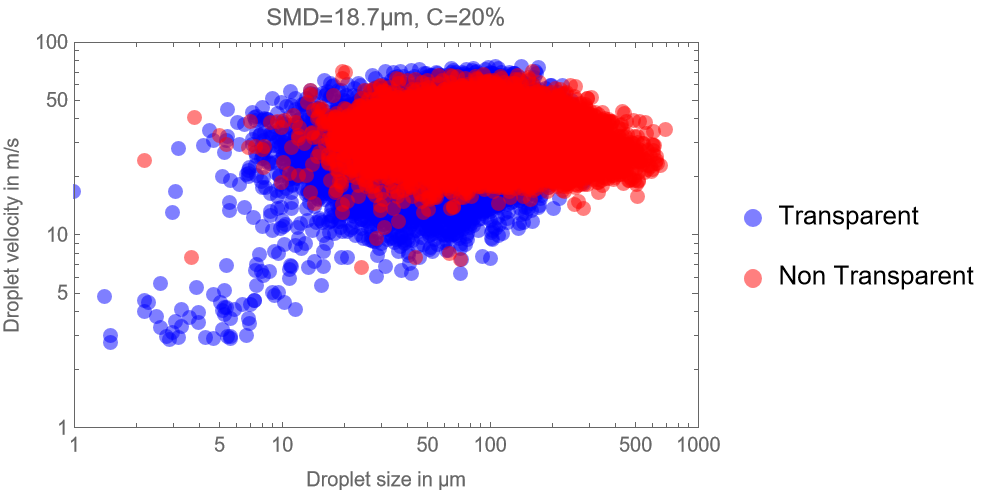
The proposed measurement method analyzes the light scattered by individual suspension droplets. Each droplet passes through an elliptical Gaussian laser beam and generates a time-resolved light-scattering signature.
Optical detectors record these signals. The signal shape and the sequence of the detected peaks contain information about the optical properties of the droplet. As a result, the system can distinguish between semi-transparent and non-transparent suspension droplets.
The method uses the Time-Shift-Time-of-Flight technique, abbreviated as TSTOF. This measurement principle enables the time-resolved detection and analysis of individual droplets within a spray.
Experimental investigation of different slurry compositions
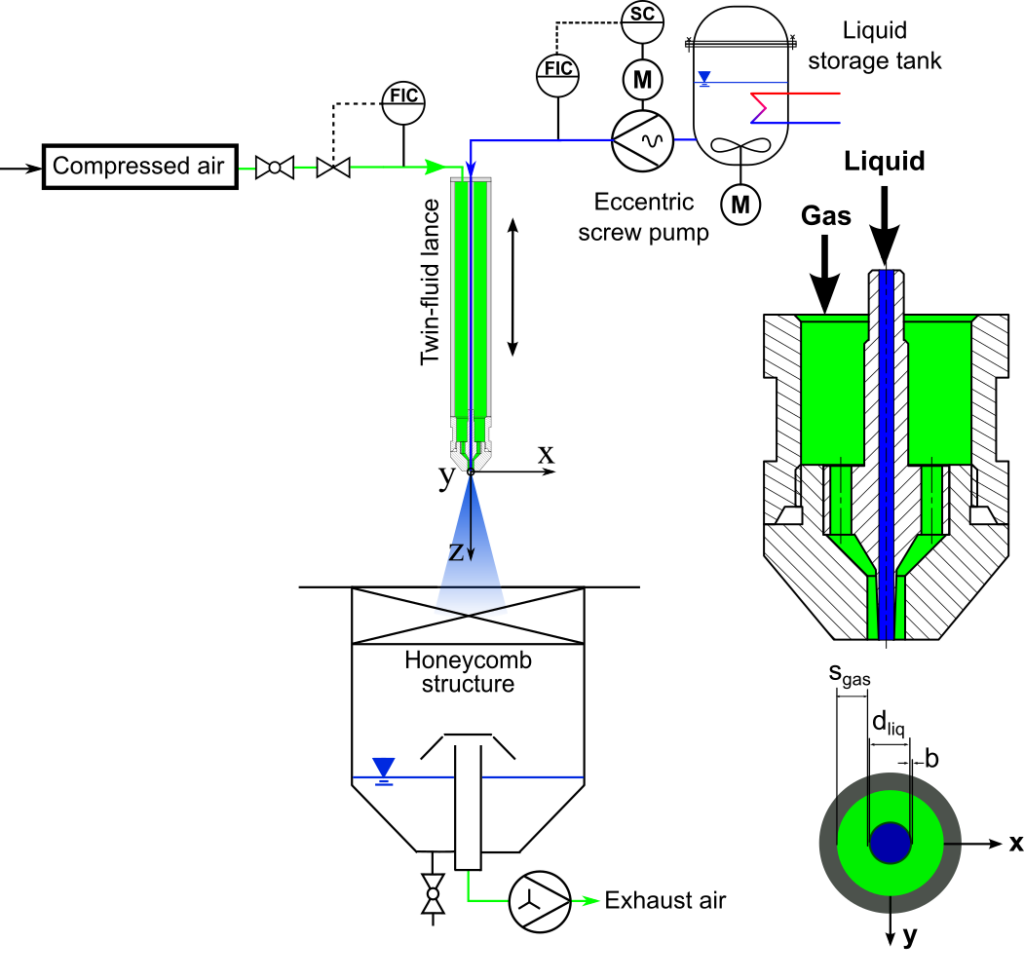
The experiments used a gas-assisted coaxial nozzle under constant operating conditions. This allowed the researchers to study how changes in the suspension affected the recorded light-scattering signals.
The investigated suspensions contained three different solid concentrations:
- 5% by weight,
- 10% by weight,
- 20% by weight.
In addition, the experiments covered three characteristic particle sizes:
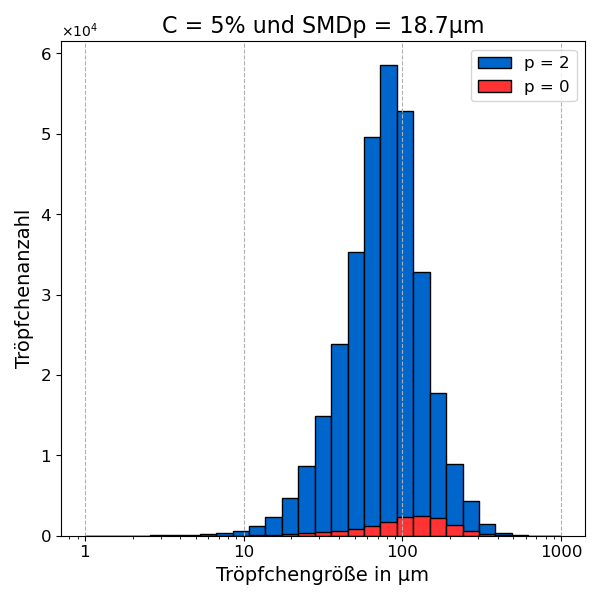
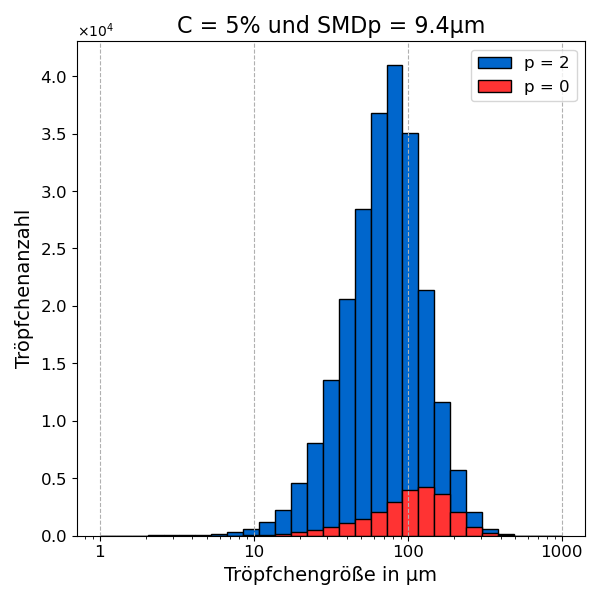
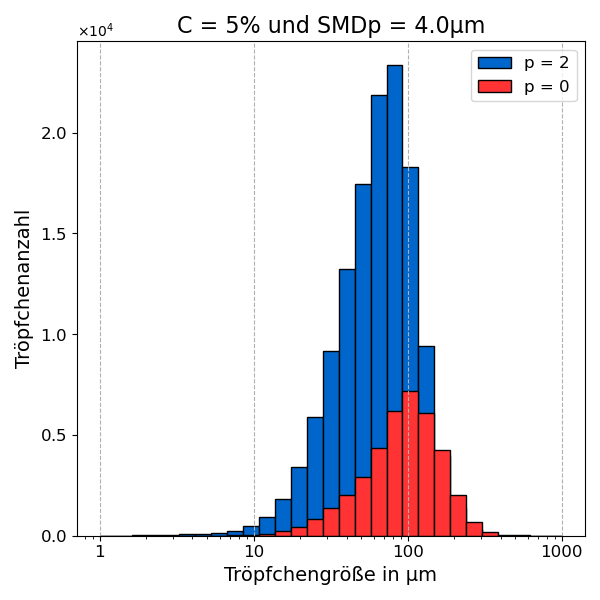
- 4.0 µm,
- 9.4 µm,
- 18.7 µm.
Microscope images in the poster show clear differences between the investigated suspensions. In particular, suspensions with higher concentrations appear darker because they absorb and scatter more light.
Relative droplet rate and Sauter mean diameter
The evaluation focused on two important parameters:
Relative droplet rate, Nrel:
This parameter describes the relative proportion of semi-transparent droplets detected within the spray.
Sauter mean diameter, SMD:
The SMD characterizes the droplet-size distribution of the detectable semi-transparent droplet fraction.
The experimental results showed strong relationships between these parameters and the properties of the suspension. Higher solid concentrations reduced the proportion of semi-transparent droplets. Smaller suspended particles also increased light absorption and reduced droplet transparency.
Consequently, the relative droplet rate and the SMD can provide information about changes in both particle concentration and particle size within the investigated range.
Results of the optical slurry spray measurement
The measurements demonstrated that the optical properties of suspension droplets change systematically with slurry composition.
As the solid concentration increased, fewer droplets produced semi-transparent light-scattering signatures. At the same time, the measurable SMD of the semi-transparent droplet fraction changed.
The experiments also showed that particle size affects the optical response. Suspensions containing smaller particles absorbed more light and therefore produced a lower proportion of semi-transparent droplets.
These results indicate that an optical slurry spray monitoring system can detect changes in heterogeneous droplet composition without collecting and analyzing every sample separately.
Simplified TSTOF measurement setup
Based on the experimental findings, the poster proposes a simplified optical instrument with one light source and two detectors.
This configuration reduces the required optical and electronic components. It also simplifies signal processing because the evaluation can focus on the relative positions of characteristic peaks within the light-scattering signal.
Such a compact system could support the monitoring of:
- slurry sprays,
- paint sprays,
- particle-loaded droplets,
- heterogeneous liquids,
- other industrial atomization processes.
The simplified configuration could therefore provide a practical basis for continuous industrial measurements and real-time process monitoring.
Machine learning for droplet classification
Machine-learning methods could further improve the evaluation. Instead of calculating every physical property separately, a trained model can analyze the complete shape of a light-scattering signal.
For example, the model could classify a droplet as semi-transparent or non-transparent. This approach may allow an even simpler configuration with only one light source and one optical detector.
Furthermore, AI-assisted signal analysis could identify complex relationships between signal shape, particle concentration, particle size, and droplet composition. However, each industrial application requires suitable training and validation data.
Potential for industrial process monitoring
The presented measurement method offers a promising approach for the continuous monitoring of heterogeneous sprays.
Its main advantages include:
- non-contact optical measurement,
- analysis of individual suspension droplets,
- detection of changes in slurry composition,
- potential for compact sensor configurations,
- compatibility with statistical and machine-learning methods,
- potential integration into real-time process monitoring.
Future work can focus on additional suspension materials, wider concentration ranges, industrial operating conditions, and customer-specific calibration models.
