

A new article has been published in the JOT Journal für Oberflächentechnik / Springer Professional. It titled “Neues optisches Messverfahren für Rotationszerstäuber”, introduces a new optical measurement approach for determining droplet trajectories and trajectory distributions in sprays generated by rotary atomizers.
Schäfer, W. Neues optisches Messverfahren für Rotationszerstäuber. JOT Journal für Oberflächentechnik 66, 52–53 (2026). https://doi.org/10.1007/s35144-026-3895-3
https://link.springer.com/article/10.1007/s35144-026-3895-3#citeas
Rotary atomizers play a central role in modern coating and painting processes. They create fine droplets at high speed and strongly influence coating quality, material efficiency, and process stability. For this reason, rotary atomizer spray monitoring is important for understanding and controlling industrial coating processes.
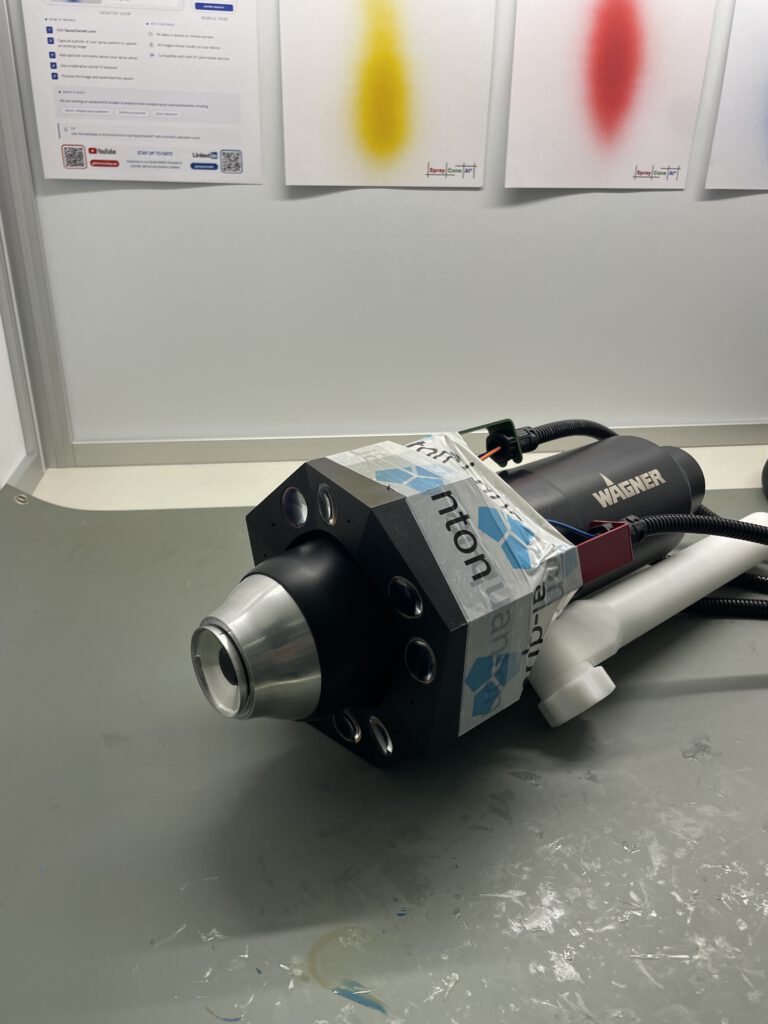
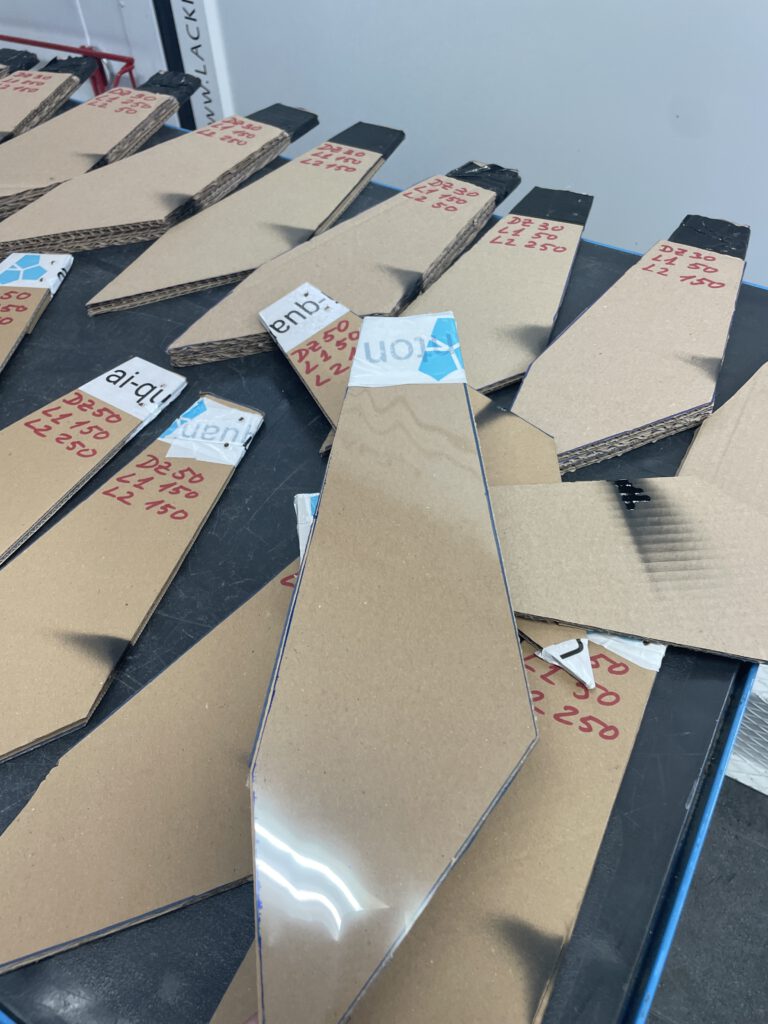
The droplet motion after atomization depends on many parameters. These include bell speed, bell geometry, paint flow rate, shaping air, and the material properties of the coating liquid. A new optical measurement method makes this droplet motion directly measurable. The method supports droplet trajectory measurement by using several differently tilted light lines.
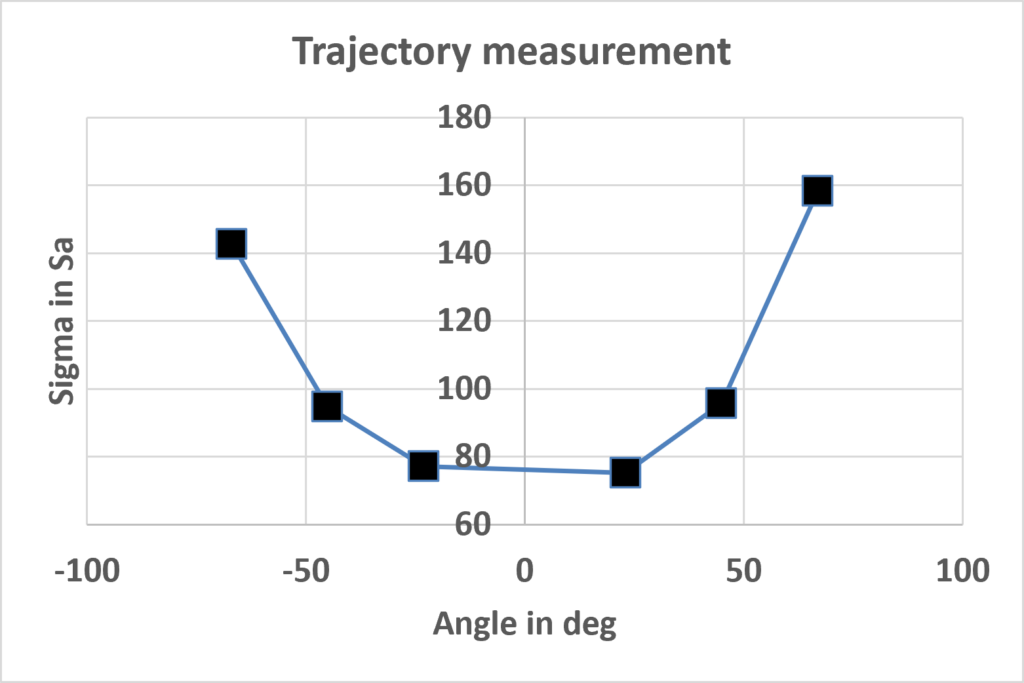
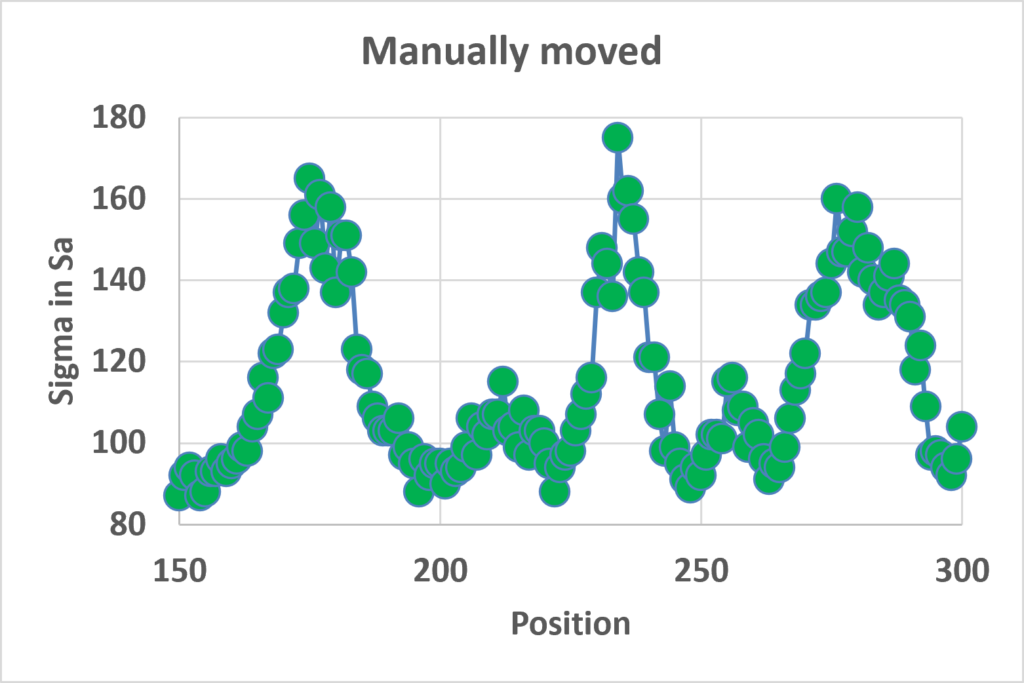
When droplets pass through these light fields, they generate time-resolved light scattering signals. These signals contain information about droplet motion, trajectory direction, and spray behavior. As a result, the method can help determine individual droplet trajectories or statistical trajectory distributions in a spray.
More Information from Tilted Light Lines
Classical optical spray measurement often uses one light line. However, one light scattering signal does not always show the real movement direction of a droplet. The signal width and signal shape depend on the droplet velocity and on the crossing angle.
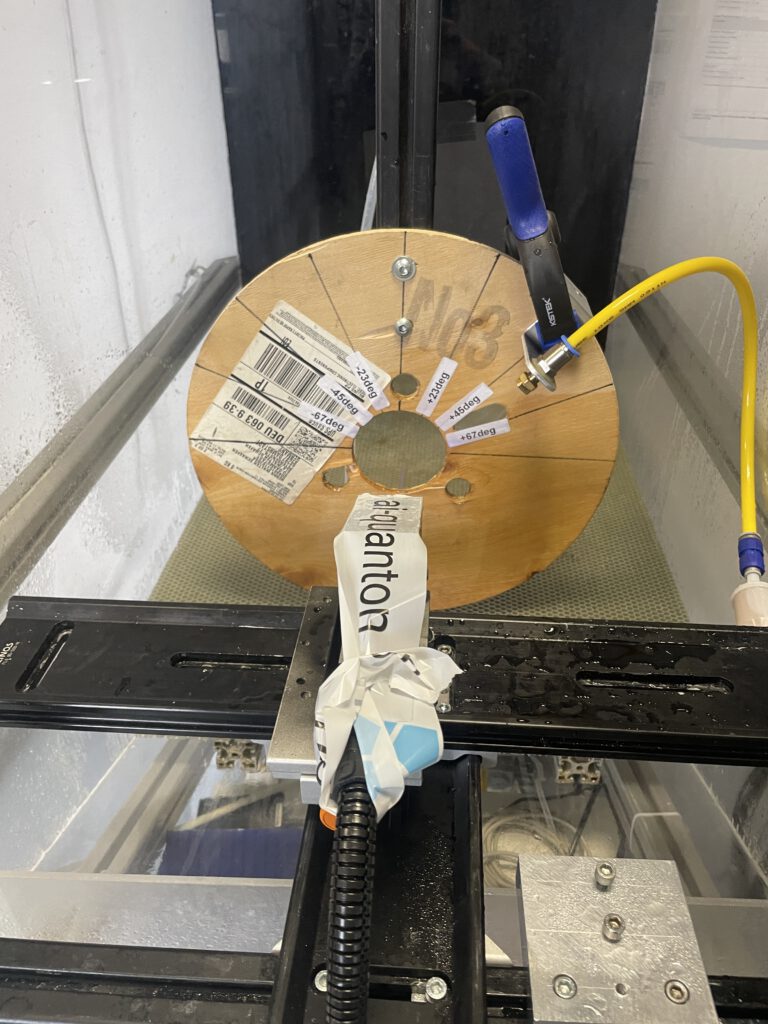
The new method uses at least two tilted light lines. A droplet crosses these differently oriented light fields and creates several light scattering signatures. By comparing signal width, signal shape, amplitude, or integrated signal intensity, the system can support droplet trajectory measurement and rotary atomizer spray monitoring.
Two Measurement Concepts for Rotary Atomizers
The method supports two measurement configurations.
In the first configuration, several tilted light lines share one common measurement volume. One droplet can then generate several related light scattering signals. This allows the system to determine or narrow down the trajectory of an individual droplet.
In the second configuration, several separated measurement volumes surround or follow the spray. The signals do not need to come from the same droplet. Instead, the system compares statistical values such as average signal width, signal distribution, amplitude, and integrated intensity. This concept is especially useful for monitoring droplet ensembles in rotary atomizer sprays.
Application in Industrial Coating Technology
Rotary atomizer spray monitoring offers strong potential for coating applications. Shortly after leaving the rotating bell, droplets often move along similar paths within a statistical ensemble. Changes in these paths can indicate changes in the process.
For example, changes in the trajectory distribution may point to variations in bell speed, shaping air, paint flow rate, bell geometry, or material properties. The method can also help detect drift, process instability, or misalignment during operation.
Therefore, the approach supports process monitoring, quality control, material characterization, and future closed-loop control of coating processes. It is especially relevant for complex coating materials, suspensions, paint mixtures, and particle-loaded liquids.
Potential for Real-Time Spray Monitoring
The method works optically and without contact. It does not mechanically disturb the droplets and can operate during the running spray process. By comparing the measured signals with reference states, users can detect process changes early.
This opens new possibilities for real-time rotary atomizer spray monitoring. In automated coating systems, such measurement data can help adjust process parameters, detect material changes, improve process transparency, and reduce rejects.
The technology creates a new path for optical spray diagnostics, rotary atomizer characterization, droplet trajectory measurement, and AI-assisted process monitoring in industrial painting and coating applications
