

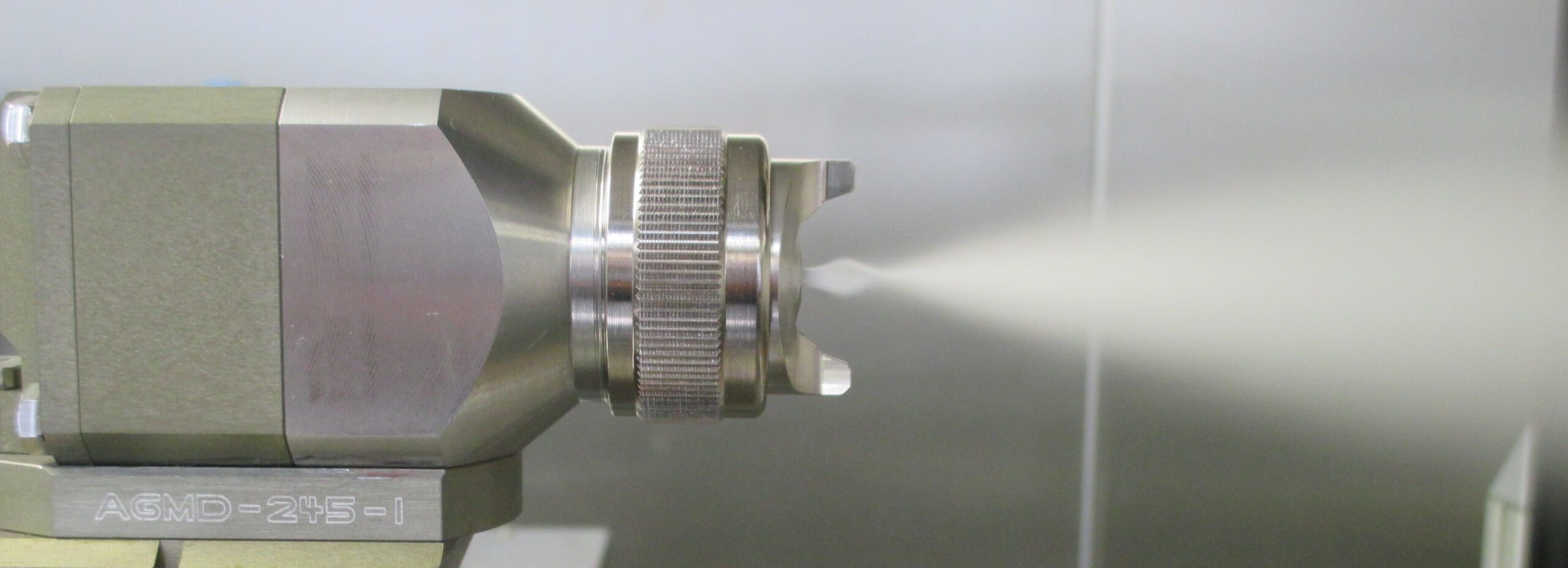
A pneumatic atomizer creates a spray by using air to atomize a liquid into fine droplets. This type of atomizer plays an important role in painting, coating, spray drying, and pharmaceutical applications. For these processes, a reliable spray scan helps users understand droplet size, droplet velocity, spray distribution, and process stability.
In this study, a pneumatic atomizer spray was analyzed with the time-shift measurement technique. The method measured individual droplets at different positions in the spray. As a result, it became possible to create spatial profiles of droplet size, droplet velocity, relative droplet density, and relative volume flow.
Schäfer, W., Rosenkranz, S., Brinckmann, F., & Tropea, C. (2016). Analysis of pneumatic atomizer spray profiles. Particuology, 29, 80–85. https://doi.org/10.1016/j.partic.2015.12.002
Spray Scan of a Pneumatic Atomizer
A spray scan moves the measurement position through the spray field. This creates a detailed map of the spray profile. In the paper, the spray from a pneumatic atomizer was measured at different axial and lateral positions. The system analyzed the wide side of the spray cone in the xz-plane.
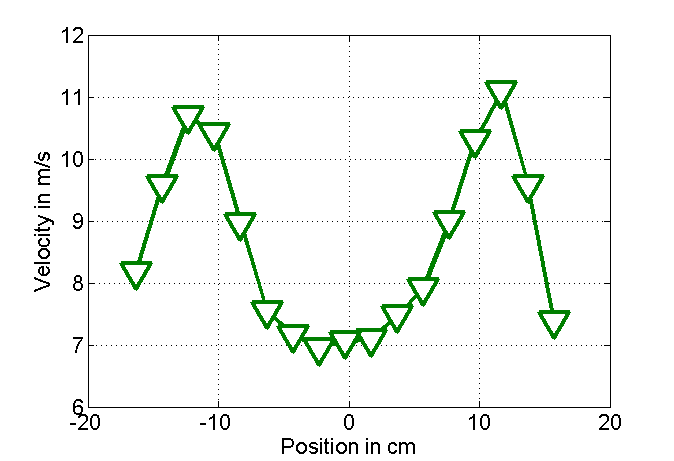
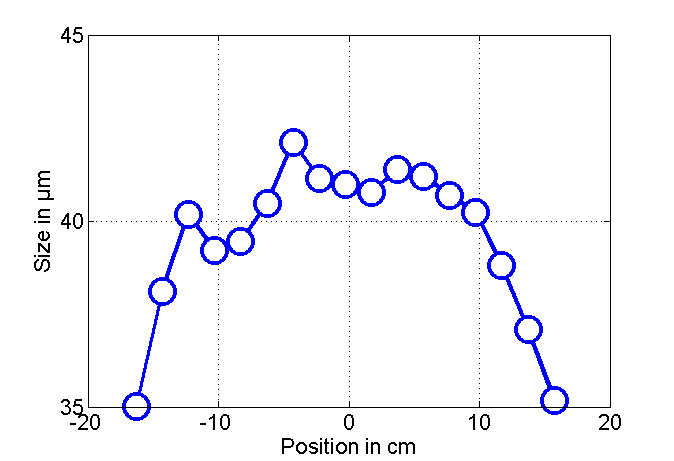
The measurements showed how the droplet size and velocity changed across the spray. The results also showed how shaping air influenced atomization. Higher shaping air pressure produced smaller droplets, while the droplet velocity showed a different spatial behavior.
Time-Shift Technique for Droplet Measurement
The time-shift technique uses light scattering signals from individual droplets. When a droplet passes through a shaped light beam, optical detectors record time-resolved signals. These signals allow the system to calculate droplet size and velocity.
This method is useful for industrial sprays because it can measure transparent and non-transparent droplets. It can also work in backscatter geometry. Therefore, the detector and light source can stay on one side of the measurement position.
Droplet Size, Velocity, and Spray Distribution
The pneumatic atomizer spray showed clear spatial patterns. The median droplet size and median droplet velocity changed with the measurement position. In addition, the relative droplet density and relative volume flow showed characteristic profiles across the spray cone.
These results are important for spray process development. A detailed spray scan can help compare nozzles, evaluate paint application processes, and detect changes in atomizer performance.
SR-Matrix for Compact Spray Profile Description
The paper introduces the SR-Matrix as a compact mathematical description of the spray process. This matrix combines information about droplet size, velocity, relative density, and relative volume flow.
The SR-Matrix can describe the spray profile with fewer measurement points. It can also help compare different atomization processes, different nozzles, or different paint materials. In addition, it offers a possible way to check manufacturing tolerances in pneumatic atomizers.
Application Potential
A pneumatic atomizer spray scan supports research, development, and quality control in coating technology. It helps users understand how atomizer settings affect the spray. Important parameters include atomizing air, shaping air, liquid flow rate, nozzle geometry, and material properties.
This approach can support paint development, spray gun characterization, coating process optimization, and industrial spray monitoring. It also provides a technical basis for modern optical spray diagnostics and AI-assisted spray analysis.
The study investigates the atomization process of a pneumatic paint atomizer by measuring droplet size and velocity distributions within a liquid paint spray. Measurements were performed at different axial positions, allowing a detailed analysis of how droplet size, velocity, number density, and local mass flux vary throughout the spray. Based on these measurements, a mathematical description of the spray structure is proposed.
Spray characterization is a key step in many industrial applications, including automotive painting, spray drying, and pharmaceutical coating. In this experiment, the spray was generated using a GunPainter system (LacTec GmbH, Germany) equipped with a pneumatic atomizer. The system enables precise control of atomization air, shaping air, and liquid flow rate, while a traversing mechanism allows spatially resolved measurements of the spray.
