

This scientific article presents an optical spray measurement method for monitoring high-mass-concentration slurry spray. The work focuses on dynamic slurry droplets that contain a base fluid and suspended solid particles.
In many industrial processes, slurry sprays are difficult to measure. The droplets can contain coal particles, pigments, aggregates, or other suspended solids. Therefore, classical spray measurement methods often cannot provide enough information about the material composition inside the droplets.
The presented method analyzes the transparency of individual slurry droplets. As a result, it can estimate the mass concentration of solid particles and give information about the average particle size inside the droplets.
Why Slurry Spray Measurement Is Important
Slurry spray processes are relevant for combustion, gasification, recycling, coating technology, and other industrial applications. In these processes, the spray does not only transport liquid. It also transports suspended particles.
For this reason, the quality of the slurry mixing process is important. Particle size, particle concentration, and spray behavior can influence process stability and efficiency. In combustion and gasification processes, these parameters can also affect reaction behavior and fuel conversion.
Optical Analysis of Dynamic Slurry Droplets
The method is based on light scattering from individual suspension droplets as they pass through a shaped light beam. These droplets can behave as semi-transparent or non-transparent droplets, depending on the particle concentration and particle size.
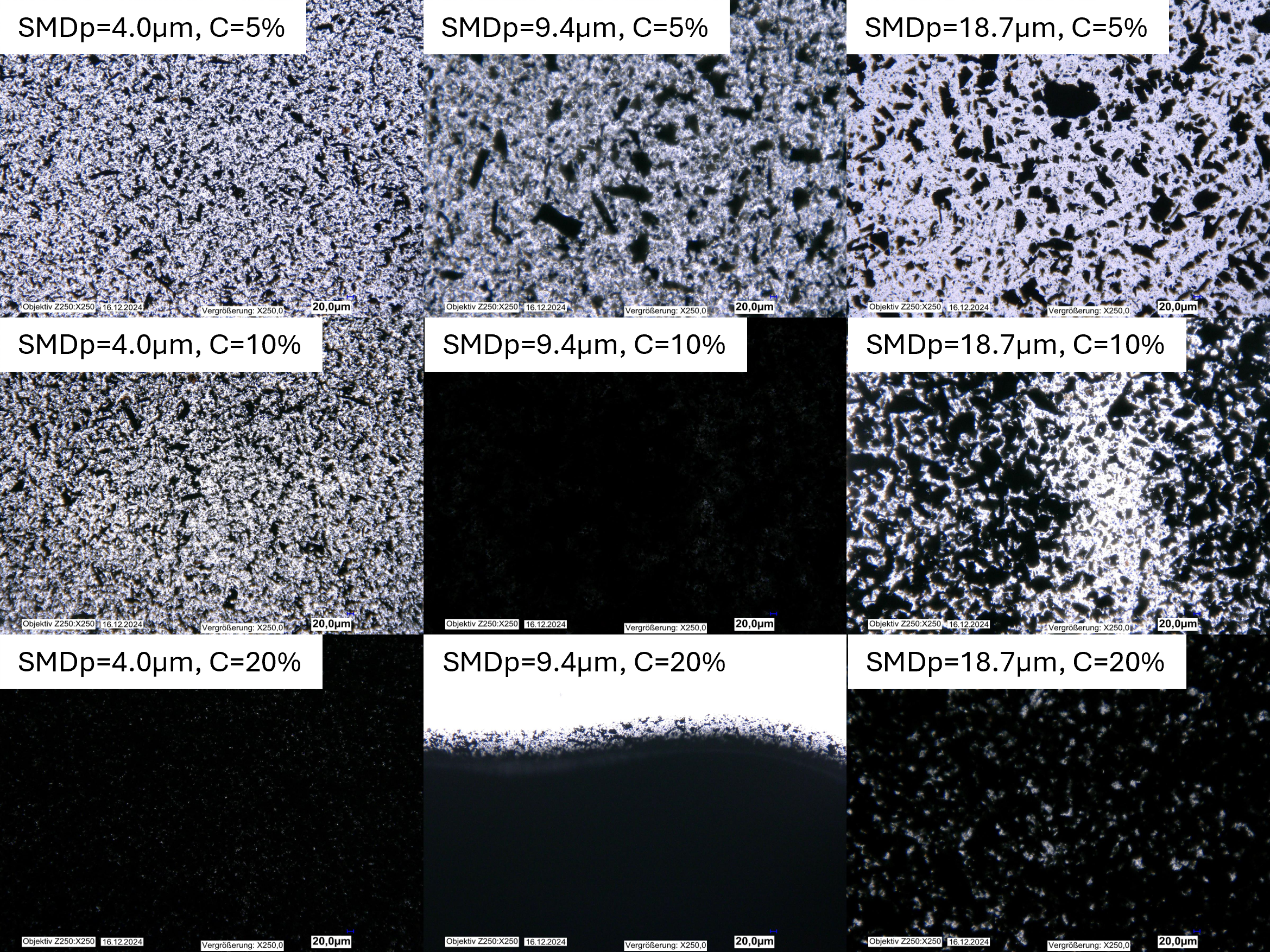
At lower solid concentrations, refracted light can still pass through the droplet. In this case, the droplet can be classified as semi-transparent. At higher concentrations, the suspended particles block or scatter the refracted light. Then, the droplet behaves more like a non-transparent droplet.
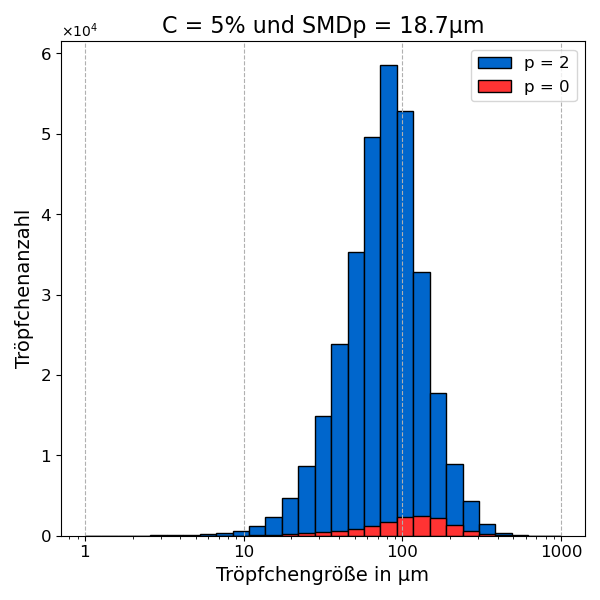
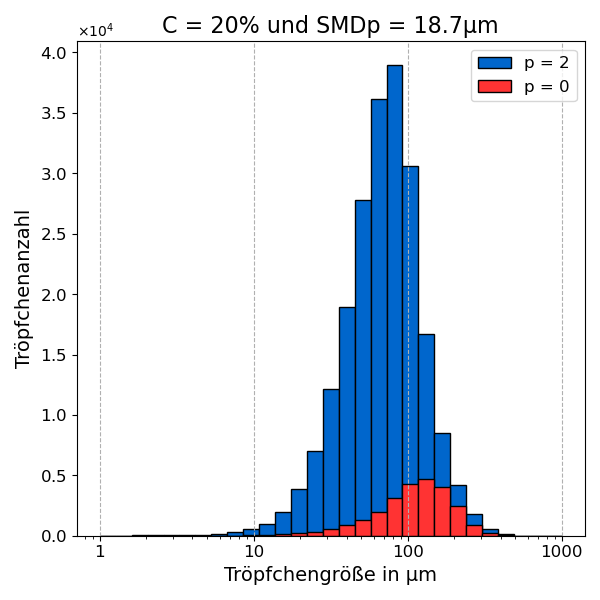
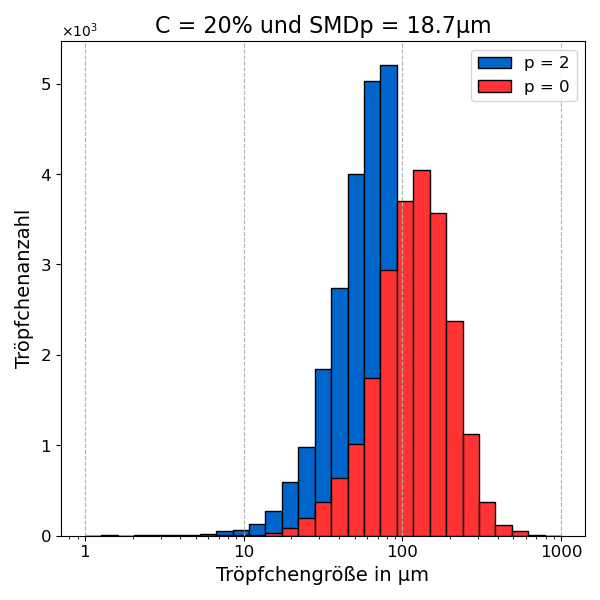
By counting the relative number of semi-transparent and non-transparent droplets, the method can provide information about the slurry composition.
TSTOF-Based Spray Measurement
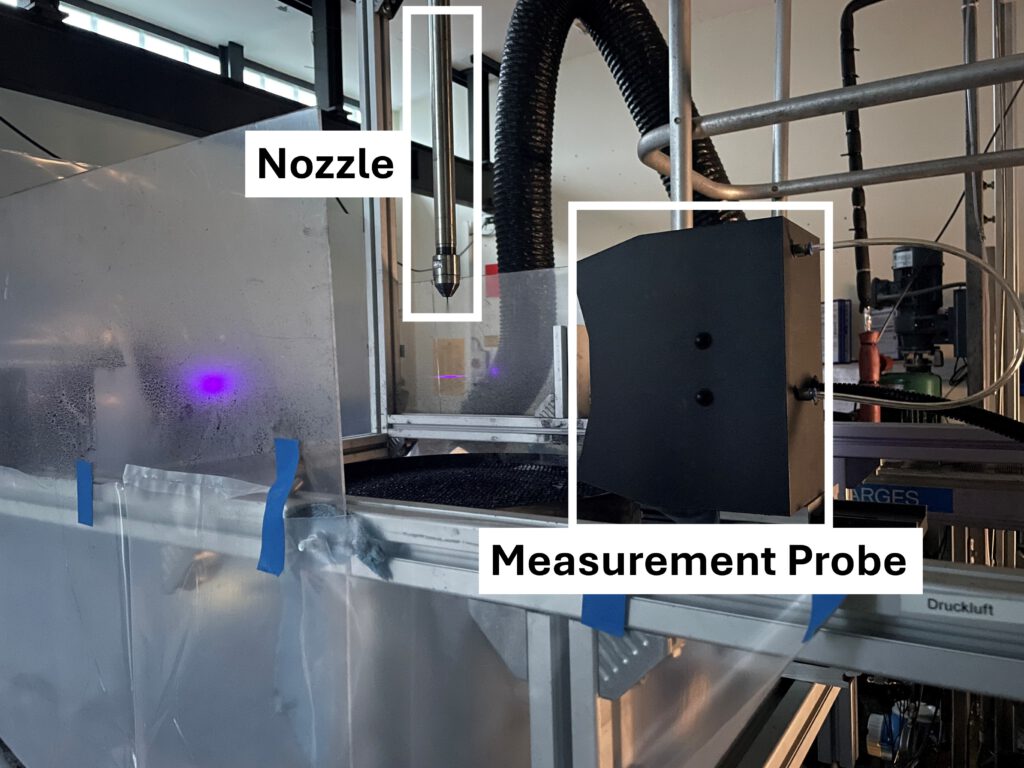
The experiments used a Time-Shift Time-of-Flight measurement system. This TSTOF-based setup works in the backscatter region. Therefore, the light source and detectors can be arranged on one side of the spray.
This is useful for industrial spray measurement because many real processes provide only limited optical access.
Experimental Study with Coal Slurry Sprays
The experimental study used slurry sprays with different mass concentrations and different particle size distributions. Coal particles were dispersed in monoethylene glycol. Three particle size distributions were prepared with Sauter mean particle diameters of 4.0 µm, 9.4 µm, and 18.7 µm.
The particle mass concentration was varied between 5%, 10%, and 20%. In total, five slurry compositions were tested.
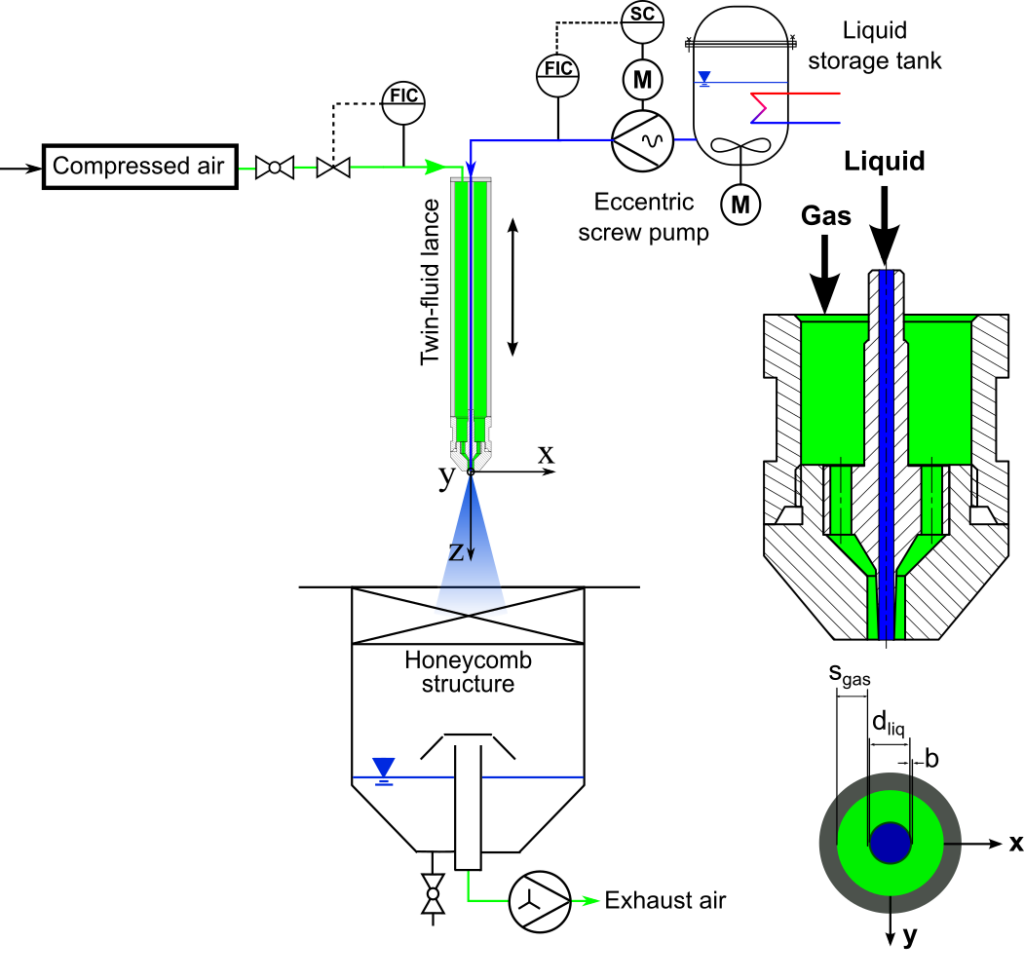
The slurry spray was generated with a gas-assisted coaxial nozzle. The experiments were carried out at the ATMO spray test rig at the KIT/ITC facility. The measurement position was fixed at 120 mm below the nozzle exit.
Results for Slurry Spray Monitoring
The results show a clear correlation between the optical signals and the slurry composition. At lower particle concentrations, more semi-transparent droplets were detected. In addition, larger particles led to a higher number of semi-transparent droplets at the same mass concentration.
The study identified two useful parameters for slurry spray monitoring: the relative droplet rate of semi-transparent droplets and the Sauter Mean Diameter of semi-transparent droplets.
These parameters can help detect changes in mass concentration and particle size distribution. Therefore, the method can also support the detection of errors in the slurry mixing process or in the milling process before atomization.
Toward Compact Spray Measurement Instruments
The article also proposes a simplified measurement concept. For many monitoring tasks, it may be enough to count semi-transparent and non-transparent droplets. In that case, the system does not need to measure droplet size and velocity in every step.
This opens the path toward compact and cost-effective spray measurement instruments. A simplified setup with one light source and two detectors may be sufficient. In addition, a machine learning model could classify droplet transparency from the light scattering signal.
Such a compact system could support real-time monitoring of slurry sprays, paint sprays, and other sprays with heterogeneous droplets.
Application Potential
This method is relevant for high-mass-concentration slurry spray monitoring, combustion research, entrained flow gasification, recycling processes, particle-loaded liquids, and industrial process control.
It can also support the development of future optical spray measurement systems for complex droplets. These systems can help researchers and engineers understand how mass concentration, particle size, and atomization conditions influence spray behavior.
Reference
Schaefer, W., Fleck, S., Haas, M., & Jakobs, T. (2025). Optical Measurement Method for Monitoring High-Mass-Concentration Slurry Sprays: An Experimental Study. Photonics, 12(7), 673. https://doi.org/10.3390/photonics12070673
